
By Frank Shkreli*/
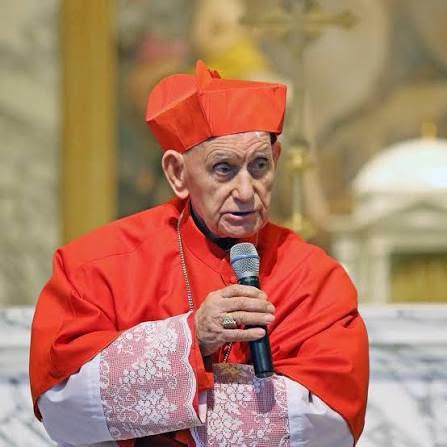
As the Albanian-American community gathers to celebrate the 98th birthday of Cardinal Ernest Simoni–Troshani, we do more than honor an extraordinary man of faith. We pay tribute to a living witness to one of the darkest chapters in Albania’s history, a man whose life embodies the triumph of faith over persecution, conscience over tyranny, and human dignity over the brutality of dictatorship. This occasion is an expression of gratitude, respect, and love for a son of Albania whose personal history has become an enduring part of the nation’s moral and spiritual legacy. For Albanians in the United States, this celebration carries a particularly profound meaning. We understand the value of freedom, the pain of exile, the longing for our homeland, and the sacrifices made by generations of Albanians who struggled to live in dignity and liberty. Cardinal Simoni’s life speaks directly to these experiences and reminds us that freedom of conscience is among the most precious gifts a human being can possess.
The life of Cardinal Ernest Simoni-Troshani is a life that refused to bow before dictatorship. Cardinal Ernest Simoni belongs to a generation that endured the persecution of religion under Albania’s communist dictatorship. He witnessed firsthand the systematic campaign against religious institutions, clergy, and the fundamental right of individuals to practice their faith. Under Enver Hoxha’s communist regime, Albania was transformed into an officially atheist state. Religious institutions were suppressed, churches and mosques were closed or destroyed, clergy were imprisoned or executed, and countless believers were deprived of the freedom to worship. Cardinal Simoni paid a terrible price for his religious convictions. He endured imprisonment, suffering, and persecution because he refused to abandon his faith. Yet the dictatorship failed to break his spirit. His story is a powerful reminder that political power may imprison the human body, but it cannot necessarily imprison the human soul. A regime may restrict freedom, threaten lives, and attempt to silence religious belief, but it cannot erase the courage of those who remain faithful to their conscience. Cardinal Simoni’s life demonstrates that a person can endure profound injustice without surrendering dignity and can confront darkness without abandoning the light of faith.
His testimony is not simply a religious story. It is a story about the resilience of the human spirit and the universal struggle for freedom of conscience. It is also an important part of Albania’s national history—a history that must include not only the people who exercised power but also those who suffered under it, resisted it, and preserved their moral integrity despite its brutality. Cardinal Ernest Simoni is someone who also embodies Albania’s spiritual resistance. For Albanians, Cardinal Simoni represents a remarkable convergence of religious devotion, personal courage, national dignity, and historical memory. His life reminds us that Albania’s history cannot be reduced to the history of its political regimes. It must also be understood through the experiences of those who suffered persecution because of their religious beliefs, intellectual independence, political convictions, or refusal to submit to ideological control. Among those who suffered under communism were Catholic priests, Muslim clerics, Orthodox clergy, intellectuals, writers, artists, and ordinary citizens whose lives were destroyed or permanently scarred by political repression.
The persecution of religious communities was particularly devastating because it sought not merely to eliminate religious institutions but also to reshape the spiritual identity of an entire nation. Cardinal Simoni’s survival and his continued testimony stand as a reminder that Albania’s religious and cultural heritage endured despite the regime’s attempts to eradicate it. His story deserves to be remembered, studied, and shared with younger generations, not simply as an account of past suffering but as a lesson in courage, conscience, and the enduring importance of religious freedom. Honoring him is therefore not only an act of respect for a distinguished cardinal of the Catholic Church. It is also an affirmation of the fundamental rights of every Albanian, regardless of religious affiliation or personal convictions.
After 36 years of transition, it is time that Albania must officially confront the crimes of communism. However, honoring Cardinal Simoni must mean more than celebrating his birthday and expressing admiration for his personal courage.
It must also serve as a call to Albania’s national conscience. More than three decades after the fall of communism, Albania still has an important responsibility to confront its communist past through a serious, comprehensive, and official reckoning with the crimes of the communist dictatorship. Historical truth cannot be built upon silence, selective memory, or political convenience. The victims of communist persecution deserve recognition. Their families deserve answers. The younger generation deserves an honest account of the country’s past. This requires continued efforts to document political persecution, clarify the fate of the disappeared, identify and preserve historical records, recognize those who suffered for their beliefs, and ensure that the experiences of former prisoners, persecuted clergy, and interned families are not forgotten. It also requires an honest reassessment of the treatment of Albania’s intellectual and religious heritage under communism. Figures such as Father Gjergj Fishta, Ernest Koliqi, Martin Camaj, Faik Konica, and numerous Catholic and non-Catholic intellectuals and clergy deserve to be examined through serious historical scholarship, free from the ideological restrictions that shaped communist-era interpretations of Albanian history and culture. Their contributions, like those of other Albanian intellectuals who were persecuted, excluded, or condemned by the communist authorities, belong to the broader history of the Albanian nation.
Recognizing these contributions does not require replacing one ideological narrative with another. It requires a commitment to historical truth, intellectual honesty, and respect for the complexity of Albania’s past. A mature democracy should have the confidence to examine its history without fear. It should honor those who suffered, acknowledge injustice, and distinguish between historical evidence and political propaganda. A nation that forgets the victims of dictatorship risks forgetting the true value of freedom. The purpose of confronting the past is not to perpetuate hatred or divide Albanians indefinitely. It is to establish a common foundation of truth, justice, and respect for human dignity. Without such a foundation, reconciliation risks becoming an empty word. You Cannot Go to Europe with Enver Hoxha! This brings us to a fundamental question about Albania’s European future. Albania’s aspirations for European integration are not simply about geography, economic development, or membership in European institutions. They also involve democratic principles, respect for human rights, freedom of conscience, and a willingness to confront historical injustices. Europe is not merely a destination. It is also a community of values.
For Albania to strengthen its place within that community, it must continue to build democratic institutions, protect fundamental freedoms, and cultivate an honest relationship with its own history. This is why the message must be clear you cannot go to Europe with Enver Hoxha! This is not a rejection of Albania’s people or their European aspirations. On the contrary, it is a call for Albania to fulfill those aspirations by overcoming the ideological legacy of dictatorship. One cannot credibly embrace democratic values while romanticizing a regime that denied its citizens freedom of religion, persecuted political opponents, imprisoned intellectuals, and sought to control every aspect of public and private life. Nor can a country fully honor the victims of that regime while allowing their suffering to be marginalized or treated as an inconvenient chapter of history. Albania must move forward with its people, its culture, its traditions, and its democratic aspirations—not with nostalgia for a communist dictatorship that inflicted enormous suffering upon its citizens.
The road to Europe requires a commitment to truth, historical memory, and the dignity of every human being. One becomes a member of European Union by defending freedom, honoring the victims of dictatorship, and having the courage to acknowledge historical truth.
This is also why the testimony of Cardinal Simoni remains so relevant. His life offers a powerful contrast between the coercive ambitions of a totalitarian regime and the enduring freedom of the human conscience. His experience reminds us that the values Albania seeks to embrace today were denied to many of its citizens for decades. Their suffering must not be forgotten, and their sacrifice must not be separated from the nation’s understanding of its European future.
For the Abanian-American community, celebrating Cardinal Simoni’s 98th birthday is also an opportunity to reflect on the responsibility of the diaspora. Albanians in America have long contributed to preserving the language, culture, religious traditions, and national identity of their homeland. They have supported Albania’s democratic development and maintained a strong interest in the country’s historical and cultural legacy. That responsibility extends beyond commemorations and celebrations. It includes defending freedom of conscience, supporting historical research, preserving the memory of those who suffered under communism, and encouraging younger generations to understand both the achievements and the tragedies of Albanian history. The diaspora has an important role to play in ensuring that Albania’s history is approached with intellectual independence and that no political ideology is permitted to monopolize the nation’s collective memory.
Cardinal Simoni’s life offers an especially meaningful lesson for young Albanians growing up in freedom. They should know that religious liberty, democratic rights, and human dignity are not guaranteed automatically. They are values that must be protected and defended. They should also understand that courage is not measured solely by political power or public recognition. Sometimes, the greatest act of resistance is simply refusing to surrender one’s conscience.
Dear Eminence, Cardinal Ernest Simoni–Troshani, on your 98th birthday, we offer you our heartfelt congratulations, our affection, and our profound respect. We thank you for your testimony of faith. We thank you for your endurance in the face of persecution. We thank you for reminding Albanians and the world that even in the darkest circumstances, a human being can preserve faith, dignity, and hope. Your life stands as a testament to the enduring power of conscience and to the strength of those who refuse to surrender their deepest convictions to political oppression.
May your example continue to inspire generations of Albanians to defend truth, respect religious freedom, and remember the victims of dictatorship. May this celebration also serve as a renewed commitment to ensuring that the crimes of communism are neither forgotten nor distorted, and that Albania’s historical and cultural heritage is examined with honesty and fairness. Above all, may it remind us that a nation’s greatness is not measured only by its economic progress or political institutions, but also by its willingness to recognize its mistakes, honor those who suffered, and defend the dignity of every human being.
As Albanian-Americans gather to honor Cardinal Simoni, we celebrate not only a remarkable life but also the values that unite us across generations and across the Atlantic: faith, freedom, human dignity, and love of country. Happy 98th birthday, Your Eminence! May God bless you, protect you, and grant you peace. May Albania honor its history, remember its martyrs, and continue its journey toward a democratic future grounded in truth and freedom. Long live freedom of conscience. Long live the enduring friendship between the Albanian and American peoples. And may the truth of history always prevail over the lies and injustices of communist dictatorship.
*The author is a former Director of European Division of the Voice of America (VOA).