• Home
  • Politics
  • Opinion
  • Culture
  • Sports
  • Economy
  • Interview
  • Reporting
  • Community
  • Vatra

Dielli | The Sun

Albanian American Newspaper Devoted to the Intellectual and Cultural Advancement of the Albanians in America | Since 1909

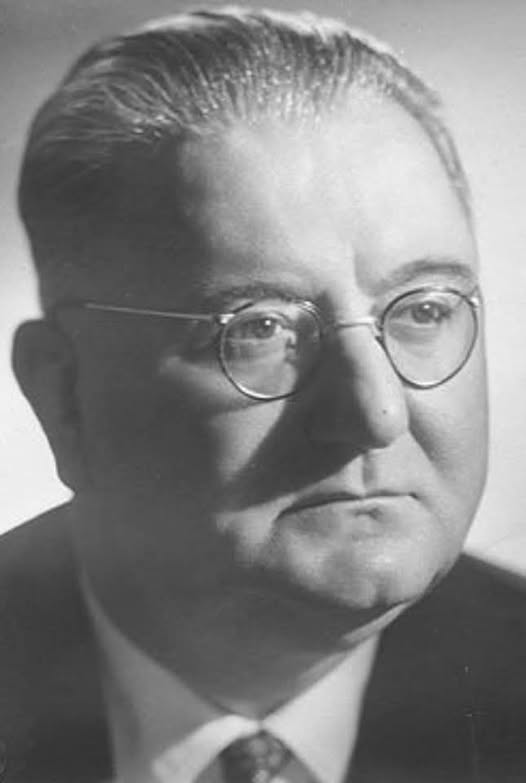
Përkujtojmë në përvjetorin e lindjes një nga figurat e Rilindjes Kombëtare, Aleksandër Stavre Drenova

April 11, 2026 by s p

#AShSh

#Adreni

Aleksandër Stavre Drenova lindi më 11 prill 1872 në Drenovë të Korçës. I mbetur jetim, mërgoi në Rumani më 1885. Ai u rikthye në atdhe disa herë gjatë viteve 1889, 1914 dhe 1937, për periudha të shkurtra. Kreu Akademinë Tregtare të Bukureshtit dhe më pas u regjistrua në Fakultetin e Shkencave Politike të universitetit të atjeshëm, të cilin nuk arriti ta përfundonte.

Asdreni u formua në një kohë kur lëvizja kombëtare shqiptare po konsolidohej në planin kulturor dhe politik. Veprimtaria e tij letrare dhe atdhetare u zhvillua kryesisht në mjediset e diasporës shqiptare në Bukuresht, një nga qendrat më të rëndësishme të organizimit dhe të mendimit rilindës.

Asdreni ishte një nga figurat më përfaqësuese të letërsisë shqiptare të periudhës së Rilindjes Kombëtare, i cili me poezinë e tij u dha zë aspiratave për liri, identitet dhe përparim shoqëror.

Krijimtaria poetike e tij përfaqëson një ndër dëshmitë më të rëndësishme të ndërgjegjësimit kombëtar shqiptar. Në përmbledhjen “Ëndrra e lotë”, si dhe në poezi të tjera, shprehen qartë idealet e kohës: dashuria për atdheun, thirrja për bashkim dhe përpjekja për emancipim kulturor e shoqëror. Poezia e tij karakterizohet nga një ndërthurje e ndjeshmërisë romantike me elemente të reflektimit realist.

Një nga kontributet më të rëndësishme të Asdrenit në trashëgiminë kulturore shqiptare është teksti i “Himni i Flamurit”, i cili mbetet simbol i unitetit dhe i vetëdijes kombëtare. Vargjet e tij vijojnë të jenë pjesë e identitetit të përbashkët të shqiptarëve dhe të shoqërojnë momentet më përfaqësuese të jetës publike.

Asdreni ka qenë veprimtar i shquar i kolonisë shqiptare të Rumanisë dhe sekretar i saj për një periudhë (1913–1925).

Në vitet 1922–1934 shërbeu, me disa ndërprerje, si sekretar i Konsullatës Shqiptare në Bukuresht. Ai mori pjesë në mbledhjen e Bukuresht-it të 5 nëntorit 1912, në të cilën u vendos të shpallej pavarësia e Shqipërisë. Poezia “Betimi mbi flamur” dhe vjersha të tjera, të muzikuara prej tij me frymëzim atdhetar, luajtën një rol të rëndësishëm në forcimin e ndërgjegjes kombëtare në prag dhe pas Shpalljes së Pavarësisë, si dhe në periudhën e konsolidimit të shtetit shqiptar.

I shqetësuar vazhdimisht për fatet e atdheut, ai trajtoi në periodikët e kohës “Albania”, “Drita”, “Shqipëria e Re” etj. probleme politike e shoqërore përmes një vargu artikujsh me orientim demokratik dhe frymë konstruktive.

Figura e Asdrenit zë një vend të veçantë në historinë e letërsisë shqipe dhe në kulturën kombëtare në tërësi. Ai përfaqëson tipin e intelektualit të angazhuar, i cili përmes fjalës artistike kontribuoi në formësimin e ndërgjegjes kombëtare dhe në afirmimin e vlerave të saj.

Asdreni vdiq në Bukuresht më 11 dhjetor 1947.

www.akad.gov.al

Filed Under: LETERSI

“The Real Thing”: A Conversation with Luljeta Lleshanaku

April 10, 2026 by s p

April 9, 2026

by Patricio Ferrari

The interviewer and interviewee talk together on a stage
Photo by Jonathan Blanc / The New York Public Library

On November 14, 2025, I spoke with poet Luljeta Lleshanaku at the Stavros Niarchos Foundation Library in New York City as part of Limelight Poetry’s World Poetry Salon—a series founded by poet Wang Yin that invites outstanding poets and artists from around the world to share their work across languages and artistic disciplines.

Limelight Poetry is dedicated to showcasing poetry in underrepresented languages and creating opportunities for dialogue between poetry, music, and translation. Drawing on the city’s rich cultural life, the series fosters global exchange while welcoming audiences into a vibrant and intimate space of poetic encounter. (Editorial note: You can watch archived video of the event on YouTube here.)

Patricio Ferrari: Thank you all for being here tonight—those in the room and those joining us from afar. It’s an honor to return to the Stavros Niarchos Foundation Library, and a privilege to be in conversation with Luljeta this evening.

Over the past week, immersed in her work, I found myself thinking about the great passions—the ones that enter our lives with force, often in our teens, our twenties, our thirties. They happen; they mark us. But they grow rarer with time. People, cities, languages. And poets, too, can arrive in one’s life with that same intensity—as a form of great passion.

I can still recall—and I imagine many of us can—the first encounter: Whitman, Dickinson, Baudelaire, Vallejo, Pizarnik . . . perhaps even Frank Stanford, for those fortunate enough. This past week, I experienced that sensation again. As Wang Yin mentioned earlier, quoting Eliot Weinberger: “Luljeta is the real thing.” He wrote this when she was in her early thirties, in a blurb for her first book in English with New Directions, in 2002.

Listening to Wang, I found myself wondering what Eliot might have said about the books that followed. He is here tonight, so perhaps we’ll ask him later. For now, I want to stay with that phrase: the real thing.

Luljeta Lleshanaku: Perhaps he changed his mind after the third book.

Ferrari: Whether he has or not, I’d like to begin with this: there is history in your work, but without slogans; there is politics, but rendered obliquely—never declarative, never programmatic. These elements unfold across kitchens, ships, prison cells, and your native village—among people you knew, and others you encountered through reading and brought into voice.

You are the real thing—not why, but how? There is a wildness of heart in your work—something rare, almost inexplicable. A singular voice at once raw and lucid, and without fear: no fear of returning to childhood, again and again. 

I’d like to begin with origins—not simply beginnings, but in the sense Edmond Jabès brings: “a writer writes origins when he writes the moment.”[i] Reading your most recent book with New Directions, Negative Space, especially the poem that gave the title to the collection: it opens in the late 1960s, during the Cultural Revolution, around the time you were born. It begins with punctured rice bags and mice—historical, but intimate. There is an arc backward, but also pulling us into the present. 

So, I’d like to ask about that early confinement—how it shaped your ideas of freedom, as a person, of course, and as a poet.

Lleshanaku: In my opinion, freedom is never a topic in itself. We demonstrate freedom in the way we express ourselves—through gestures and actions. I would say the same even about love. But of course, you know, in almost every poem, you can find the different shapes or aspects of freedom—even in a love poem. But it reflects more boldly and directly in the long dramatic poems such as “Negative Space or “Water and Carbon.” 

Freedom is never a topic in itself. We demonstrate freedom in the way we express ourselves—through gestures and actions.

I like very much something George Orwell said: “Freedom is the freedom to say that two plus two make four”—accepting reality.[ii] Where I demonstrated my freedom most was in poetry—in freedom of expression. 

In one of my early poems titled “The Wanderings of the Freedom” (Child of Nature, 2010), I say: “Finally, I am free from the illusion of the freedom / finally I am free . . .” It seems that living under such a totalitarian regime as communist Albania encouraged us to create an idealistic model of what we didn’t have: freedom. And the postcommunist period disappointed our expectations. The bitter clarity, the disillusionment about freedom became an expression of freedom itself in my poetry; it replaced and challenged my vision of freedom, it pushed me toward a more analytical and critical perception of society and history, and toward a deeper understanding of human nature. 

In the poem “Marked” (Child of Nature), for example, I interpret the postcommunist reality as a consequence of the transformation of collective consciousness, on how the long survival experience dismisses the concept of freedom: “And then there is one marked for survival / who will continue to eat his offspring like a polar bear / that never notices the warming climate.”

Freedom is accepting reality—and expressing it.

Ferrari: Across your books with New Directions—Fresco (2002), Child of Nature (2010), and Negative Space (2018)—there is this constant return.[iii] But it never feels nostalgic. It feels almost like a structural necessity. Why is that return so central to your work? 

I’d also like you to tell us about the “Yellow Books,” which you take up in one of your poems in Child of Nature and which seem to be a crucial part of Albania’s history.

Lleshanaku: Yes, it’s important to understand Albania’s history. A big part of the audience tonight is Albanian, and there is nothing new for them. But for foreigners, it remains a mystery.

One major restriction was censorship—not only of literature, but of information. It was nearly impossible to access Western literature, especially after the 1960s. Even Russian classics were censored. 

“Yellow Books,” in the plural, referred to banned books circulating secretly. They were called yellow books because they turned yellow from moisture and dust while being stored in hidden places.

“Yellow Books,” in the plural, referred to banned books circulating secretly. They were called yellow books because they turned yellow from moisture and dust while being stored in hidden places.

I read the books of Tolstoy, Chekhov, Turgenev, Sholokhov, and many other of my favorite books this way. . . . In one case, I remember how my cousin got very angry with me when I returned Anna Karenina back to him with some leaves fallen out due to failed adhesive. And he was right because it was impossible to replace it, to replace them. Of course, not all banned books were books worth risking for, but it was the “forbidden fruit effect” that intrigued us. It was especially their clandestine circulation that mystified them even more. 

Before the fall of the regime, the libraries had a restricted section called the Rezervat—accessible only to trusted individuals. You could find some literature in French and Italian, but most of the books and magazines were in Russian, where you could find also translations from contemporary Western literature. So, can you imagine: the “father country” of communism, the Soviet Union, was much more liberal than Albania! For nearly fifteen years, Albania was among the most isolated countries—no travel, limited books, censored media.

Ferrari: Yes, absolutely. 

Lleshanaku: The most liberal period in Albania was during the Khrushchev era from 1956 until 1961 when the Soviet–Albanian alliance was split. Then Albania became an ally of communist China, an alliance that lasted almost two decades (from 1960 to 1978). The Chinese influence was economic as well as ideological; the Cultural Revolution inspired by the Chinese model was a movement that caused a great regression in the country. In the name of the struggle against “old thoughts, old culture, old customs, and old habits,” the regime targeted the religion and intellectuals, destroying in this way every liberal tendency and the cultural/spiritual heritage that still remained intact.

Reading books—those few that existed, all under censorship—was the only way to survive. We had no access to any other information. Television was censored as well. At night, we built illegal antennas to intercept radio signals.

We had no access to other information. Television was censored as well. We’d build illegal antennas to intercept radio signals at night.

The collapse of the regime found us especially hungry for knowledge and information. A new generation of writers emerged—mine. We embraced everything irrationally. Our generation was very lucky. On one hand, we had what the previous generation did not. They lacked an art education because reading is an art education, and it wasn’t because censorship worked only in publications. Censorship was omnipresent. On the other, there was a kind of chaos in creativity. I mean, subconsciously, everybody tried to run after their idols or the writers they’d just discovered, and it was very difficult to find your way. It was a transitional period, and of course, some of us survived that chaos. Assimilation is probably the right word. But some did not.

Ferrari: This raises questions of influence, limitation, and protection.

I’d like to ask about objects in your work—those recurring, almost talismanic presences. There is a remarkable attentiveness to them, never moralizing, but deeply observant. I wonder to what extent that attention is rooted in material conditions—in scarcity, in the intimacy of daily life. And more broadly, did the relative lack of access to external literature allow you, as a young writer, to develop your voice more independently? What, if anything, was generative in that experience?

Lleshanaku: I think the way I write is shaped by that experience, where images, objects as images, or details play a crucial role. Of course, there is nothing special about it; this happens with many other poets. What is special in this case has to do with the uniqueness of these objects in themselves, the material environment that shaped my experience and identity. But I want to talk a little bit more about it.

The so-called “minimalism” in former socialist countries was dictated by the material shortages; it was just poverty. Living in Albania, nothing was thrown away. Several types of goods were very limited. So, probably most of the time we shared a comb among two or three people. Everything was used by everybody except a toothbrush. 

Objects were irreplaceable. I remember that if you broke the milk bottle, it was also difficult to replace it. That’s why we paid so much attention to objects. They were expensive, and we couldn’t afford them. Another thing is that the market was very limited in supply; technology was very unproductive, it had immense deficits. So, there was a lack of very common products everywhere in markets across Albania. Many possessions were used in two or three generations. For example, I had a school bag that had been used by two previous generations. Almost nothing was private; every item possessed a special status, so every item was overloaded with history. And there are items that exceeded their function, like the Czechoslovak radio, which was the only window to the free world through the waves of the Voice of America or the BBC, becoming the only source of hope.

I remember that if you broke the milk bottle, it was also difficult to replace it. That’s why we paid so much attention to objects.

These objects outlived people. Can you imagine? Most of my family has already passed away, but the objects are there because we developed that connection. And if not physically, at least in our memory, these possessions are indelibly alive, connected inseparably to our lives. They are like souls, spirits, and witnesses. They have personality. 

Ferrari: Some readers might think of Felisberto Hernández, who personifies objects—but your work avoids sentimentality. There is a wide range in your poems, yet the materials remain strikingly elemental—drawn from everyday life.

I’m thinking, for instance, of “Monday in Seven Days” in Child of Nature, where you give voice to members of your family. There is a beautiful moment when your uncle speaks of a fazzoletto—you retain the Italian, since he brings it from Italy—and it becomes almost talismanic, a point of intimacy between uncle and niece. There is closeness, but never excess.

Lleshanaku: My poetry is not confessional. That’s why I’m a very slow, lazy poet. A purely confessional poem feels unfinished to me.

One summer I went back to my hometown to write because the environment and everything is there, and it’s a good place to work. I remember my uncle, who read books, but he didn’t have any affection for poetry in general, asking me, “What do you say in your poems?” Not “what do you write,” but “what do you say.” That question stayed with me. 

It’s not enough to tell a story, I think. I always ask: What is behind it? What does it mean? Although it may seem spontaneous and subjective, I always write with a preexisting idea, which comes as a result of an in-depth analysis of several experiences. It’s a very cerebral, slow, and “risky” process, but on the other side it can take you beyond the immediate to an abstract, shared human ground. Perhaps it was the life I had full of extreme experiences and exposures, from one extreme to the other, from “mountain to sea” and vice versa, that cultivated an analytical mindset in me. So, I ask for something that belongs to everybody, for something that isn’t stuck in one’s own personal history—that it can be read from everywhere. 

But it’s mostly the technique of imagery, the language of objects and details, sentimental or not, that camouflages this preexisting idea. Their way of communicating is sensory, concrete, tangible, and credible, making the reader involved, experiencing the essence/idea of the poem as their own revelation.

Ferrari: At certain moments, I found myself thinking of Alberto Caeiro—Pessoa’s master. More precisely, of what he, as a sensationist poet, says about this or that aspect of nature. For instance, he insists that “stones are just stones”—not this or that particular kind.[iv] When he speaks of trees, he simply says “trees,” not naming a species. He doesn’t say poplar, for example—and I mention poplar because it appears in your work.

What’s remarkable is that, when we read you—or when we hear about a specific mountain—we could be anywhere. We’re not necessarily in Albania. The same could be said of the confinement. It doesn’t have to be 1968 or the Cultural Revolution in your country. I think the work truly succeeds on this level—and that leads me to a question. It succeeds in not limiting its geography, neither in space nor in time.

Do you feel that this kind of success comes naturally to you as a writer? As readers, it never feels forced. I wonder if this goes back to something in childhood—to its mystery, which is why I mentioned the wildness of the heart.

As I read your work, I keep thinking of Rilke’s Letters to a Young Poet—of his insistence that one remain faithful to the immediacy of everyday experience, to what one perceives almost as a child would. And, if I’m not mistaken, Baudelaire says something along similar lines: that genius is nothing more than childhood recaptured at will.[v]

Lleshanaku: Childhood is important for everyone. The further we move from it, the more preserved it becomes. Distance—whether in time or space—intensifies memory. It’s like a turtle’s shell—something you’re not aware of. When the turtle moves, it isn’t thinking about the shell; it simply carries it.

We keep going back to it, again and again. Not out of sentimentality, but because whenever we feel lost in life, we return there. It’s like getting lost in a forest: what do you do? You go back to where you began, and then you try a different direction. In that sense, all those regrets—or spiritual disorientations—bring us back, again and again, to that point of origin. You can interpret this in many ways, perhaps as a kind of emotional identity. But for me, at least, this is how the cycles of creativity repeat: every return to childhood experience corresponds to an inner transformation, and identity re-evaluation.

You might think it’s just about Albanian history, or my own childhood. But when you ask Americans, they often say, “Oh, that’s not interesting.” And yet, if you insist, they begin to tell their stories—and if you go further back, to their grandparents and great-grandparents, to how they came from Europe in different waves, something shifts. What seemed uninteresting becomes deeply compelling.

That’s what I mean. Every childhood is unique—and almost sacred to the individual.

Ferrari: I think of it, of course, as a kind of treasure house—not only of place and memory, but of language itself, of the mother tongue, of its very DNA. In your case, the DNA of the Albanian language.

I wonder, then: now that you’ve been living in the United States for some years—and have been coming here over the past two or three decades—has your relationship to Albanian shifted in any way? For instance, in one of your poems, thanks to the translation, I learned that in Albanian “autumn” is feminine.

Lleshanaku: Hmm, I never thought about it before . . .

Ferrari: Right? I became curious, because in the languages I know, “autumn” is masculine—certainly in German, and in most (though not all) of the Romance languages. And I began to wonder: What about the other seasons? What kind of imaginative or emotional shift does that create for someone within that language?

Of course, if you’re fully inside a language, without any distance from it, these things simply feel natural—they don’t really register. But you have had that distance, or . . .

Lleshanaku: It’s different. . . . As a poet, I never paid enough attention to language and form; my focus is the meaning, the content it conveys. But I understand what you are talking about: the inner temperament of languages.

Ferrari: Let’s stay with this for a moment—the DNA of Albanian. I mentioned, for instance, that “autumn” is feminine. For writers who remain entirely within one language, who are monolingual, this may never even arise as a question.

But in your case, you grew up alongside Italian, and now, for the past two decades, you’ve also been living with English. So, there’s a certain distance, perhaps—not to see Albanian as a second language, of course, not at all—but enough of a pause to notice: this is what Albanian does, and English does not do this.

Lleshanaku: Yes, of course—but let’s think about winter, since I was just considering that. Albania is, after all, a Mediterranean country; it’s relatively warm. So, the three warm seasons are feminine, you know . . . and winter is masculine.

Ferrari: Because winter is macho!

Lleshanaku: It makes sense—logically, it does. But we also have another old-fashioned word for spring, a borrowing one: bahar, which comes from Persian, via Turkish, I believe, and is neutral in gender.

There is a theory, known as linguistic relativity, which suggests that the language one speaks influences the way they think and perceive reality. Indeed, the opposite of that sounds more convincing to me: it’s more the way they think and perceive reality that influences the language, from national to individual language. Italian, for example, seems very musical and dramatic because of its pure and opened vowels that usually close words and the predictable rhythm. It fits perfectly to Italian people, their lyrical nature, their openness, directness, and their emotional expressiveness. And they consume more conversation than food in the dining table. Talking is of high importance for them; a living style. To speak their language, you should act like an Italian.

The German language always sounded determined to me, due to its high-pitched sounds, consonant clusters, and especially the placement of the verbs at the end of the sentence—a syntax element. For some unexplainable, subconscious reason, this is my favorite language. I feel it physically. 

But even within the same language, individual speaking style means a lot. A very interesting case is that of airplane pilots, whose faces we almost never see, but we hear their voice through the cabin loudspeaker system during announcements. And intuitively, we know in the hands of whom we entrust our lives. 

Whereas English seems to me the most flexible language of all, and as such without strict rules. An open language, rich in jargon that quickly turns into a norm. Very dynamic, I mean. Perhaps also because of the cultural mixing and overlaps. And without a doubt it’s a cerebral language. 

Ferrari: Do you think—this brings me to another question—that the exophonic, or heterophonic, experience of writing in a language other than your mother tongue is something you’ve tried, or might want to try?

Lleshanaku: I speak English but don’t feel capable of judging how my poems sound in English. Maybe because of it, because I am not fully in or fully out of it. It means, I miss the right distance to it. This is what prevents me from writing my own poems in English.

Writing is primarily a process of thinking. Conceiving a poem can take me weeks, months, sometimes even years, while writing it down takes me very little time, just a few hours. And I’ve never quite understood the question, “In what language do you think?” heard from time to time. Do we really need a language to think, when thinking is much older than language?

Do we really need a language to think, when thinking is much older than language?

Honestly, if you saw my notes during the writing process, you would find a lot of lines and phrases in English mixed with those in Albanian. More than an attempt to translate my thoughts into English, it is a way to hide my insecurities behind another language, whose secrets, hints, strength, and weaknesses I do not know yet. It is precisely the mystery of the other language superimposed upon my text that makes it seem more interesting in my eyes.

But for sure my poems sound very different in Albanian. Albanian is a rich language, and many of its words have an onomatopoeic quality. Through them, you can form a vivid sense of natural phenomena—there’s something inherently poetic in that aspect of the language.

Our grammar, though, is less conducive to poetry than English. It’s closer to Latin, with longer, more elaborate forms. English, as you know, with its shorter grammatical structures, allows poetry to sound more . . .

Ferrari: So—will we have Luljeta poems . . .

Lleshanaku: . . . shorter . . .

Ferrari: . . . in English, at some point?

Lleshanaku: Yes. While in Italian, those grammatical forms give Albanian poetry a kind of ceremoniousness. I’m thinking of the Albanian versions: if you listen to my poems in Italian, the lines are longer, the words are longer. And so you begin to experience the effect of the sound itself. It’s actually easier when you don’t understand the language—you can simply enjoy that kind of blindness.

Ferrari: The music.

Lleshanaku: Yes, exactly. But to come back to your question—of course I would like to. Who wouldn’t? Some Albanian writers do write in the languages of the countries where they live—English, French, Italian—and I admire them for that.

The thing is, I’ve always struggled with foreign languages. I’m a very logical thinker, and languages are arbitrary—you simply have to take them as they are; logic doesn’t really help you memorize them. I’ve always had difficulty with that. I don’t really know anything by heart unless there’s some logic involved.

When you’re a child—or even just young—it’s easier to learn new languages. But later on, language becomes a system that’s already fully formed in your mind. So, by the time I felt ready, or wanted, to write my poems in English, it was already too late.

Ferrari: You live in New York City—you could absolutely begin writing in English, if you turned to it.

Lleshanaku: But you see, it’s not really about vocabulary—not about how many words you know. It’s about syntax, about the way a language thinks. And the language you inhabit isn’t so flexible that you can give your thoughts any shape you want. They’re already shaped—there’s a structure to them. So, it’s not something you can simply switch. I would need time . . .

Ferrari: This is a topic very dear to me—we’ll come back to it.

Lleshanaku: I mean . . . language reflects your personality. The vocabulary, the grammar, the idiomatic structure shape the way we think, our background, and our perspective on the world. You can change the language but can’t really change yourself as a person. It’s tied, at least in part, to your personality . . .

Ferrari: Of course. Of course.

Lleshanaku: For better or worse—with everything that I am.

Ferrari: A personality for each language. 

Lleshanaku: Exactly—it’s a system already installed inside me. At my age, at this stage, I find it difficult to express myself fluently in another language in the way I might have if I would do that earlier when I was younger, and living here.

As a writer, this is much more difficult, because you need to know well the living language—the vivid, everyday English. Whatever I do, I feel I can’t quite reach that. Institutional English is something else entirely . . .

Ferrari: It’s another—another thing. But before . . .

Lleshanaku: Because it all depends on the environment, on the experiences you have in a country, on the people you live among . . .

Ferrari: With whom you live—of course. We only have two minutes left, and I have so many questions, so I’ll ask two and let you choose one. [Laughs]

I’d love to hear about “Homo Antarcticus”—it’s such an extraordinary poem, unlike anything I’ve read. It works through a kind of negative space, and you give voice to Frank Wild—I found myself thinking of Browning and the dramatic monologues. So: how did you come to Frank Wild, and what was the process behind the poem?

Or, if you prefer, you could speak about your relationship to images and cinema—Tarkovsky, Bertolucci, Hitchcock . . .

Lleshanaku: It’s better—this one.

Ferrari: All right.

Lleshanaku: You were asking about facts, about testimony and history, about the relationship between documented events and personal experience. With this poem—which was probably the greatest risk I’ve taken as a poet—I chose to write out of a documentary source. The story is well known, widely circulated . . .

Ferrari: Frank Wild—the British explorer . . .

Lleshanaku: Exactly. It’s a matter of record, a document. Everyone already knew it—there was nothing, it seemed, left to say. But what truly struck me was not simply the survival of the expedition crew for two years, there, in Antarctica . . .

Antarctica—almost nowhere. What began as a scientific expedition under Shackleton turned into a rescue mission. His only goal became how to bring those twenty-three—or twenty-five—men back home. And that’s where his leadership truly emerged; he’s studied everywhere now as a model of leadership, for what he did. But in a sense, there’s nothing new to add about that.

What really struck me—what pushed me to write the poem—was something else, a kind of turning point. When those men returned home, after surviving what seemed impossible in every sense—the cold, the hunger, the anxiety, the hopelessness—they couldn’t survive their ordinary lives. They became, in a way, like the walking dead. They were no longer capable of living as before. Only a few managed. Others returned again and again—Shackleton himself, twice . . .

When those men returned home, after surviving what seemed impossible in every sense—the cold, the hunger, the anxiety, the hopelessness—they couldn’t survive their ordinary lives.

Ferrari: Six times.

Lleshanaku: . . . until he died there. The question for me—the idea I wanted to explore—was this: What is it that modern civilization gives us, and what does it take away? What is wrong, somehow, with this balance?

We see the other extreme: those men, alone in the middle of nowhere, facing only the immense forces of nature—and they survived. And yet here, in ordinary life—paying rent, paying off loans, getting married, starting a family, all these everyday demands—they could not survive. “Once you’ve been to the white unknown, you can never escape the call of the little voices,” is how Frank Wild himself described the post-Antarctic drama.

Ferrari: In a way, yes—and this is precisely what feels so extraordinary, so powerful in your work. This poem, again, is so different from the rest, so unexpected, because it confronts what happens when we return. We see this already in your earlier books: those who lived in confinement and then found themselves, suddenly, in freedom. What happens when we return to a so-called . . .

Lleshanaku: So—where did your freedom go?

Ferrari: Exactly. Exactly. In a way, it becomes another way of exploring the human condition.

Lleshanaku: And the reason I chose Frank Wild as the lyrical voice—it was, at first, a tactical decision. We know so much about Shackleton, but Frank Wild was more of a . . .

Ferrari: The right-hand man.

Lleshanaku: In the shadows, let’s say—the forgotten man. That gave me a certain freedom to tell the story through him. And Frank Wild also came to symbolize friendship. He had ambitions of his own, of course, but for him it was more important to remain loyal, to be Shackleton’s right hand, than to pursue those ambitions. And in our time, these are values that are being lost—friendship, loyalty.

There was also something else, something I’ve never said before: He reminded me of my uncle, who lived, I could say, an epic life. He was executed at thirty-seven. He was part of the anticommunist resistance, fighting in guerrilla groups, living illegally with his unit. He was a very brave, determined man—quiet, reserved—but a man of action, and deeply enigmatic. He even resembled Frank Wild physically: his bearing, his face, his presence. This is the first time I’m saying that—that Frank Wild reminded me of my uncle.

And his end was tragic. He was captured, betrayed by the last person he trusted—his childhood friend. That was how it ended. So, all these elements . . . when you begin, you’re not entirely aware of them yourself. But gradually you understand what draws you to a figure, to a portrait like this. I read all the diaries, of course. There isn’t much written about Frank Wild, but that absence gave me space—space for imagination, for invention. Most of what is in the poem is imagined; only a few elements are drawn directly from the historical record, things I had, in a way, to “cook” from the available material.

Ferrari: What that poem ultimately does is carry even further what you had already been doing—it pushes it much further. By taking on someone outside your culture, outside your century, and placing him in a context of extreme hardship, you open something new.

And this is where, I think, by not falling into—or following—a confessional mode, your work arrives somewhere else. We read a poetry that, unlike so much of what we encounter in the twenty-first century—so many poets, or so-called poets, who lament or dwell on their own suffering—does something different.

In your work, there is a kind of affirmation. Not a naïve celebration of suffering, of course—not of sadness, nor of horror—but a deeper sense of belief in human beings, in humankind. And so, there is hope. It is, in that sense, a poetry of hope.

I keep coming back to the word I used at the beginning: “stubborn”—but in the best sense, a kind of stubborn freedom . . .

Lleshanaku: Yes.

Ferrari: . . . in your work, and in this poem in particular.

Lleshanaku: It’s directly connected to “Water and Carbon”—because this poem, perhaps more than anything, represents what we’re talking about. This is the only poem where I deal, somewhat directly, with politics—with the communist regime.

It’s also the only poem where I allow myself a certain grammatical playfulness, shifting between the first person, the second, the first-person plural—very deliberately, in order to expand the scope of the story.

But the question is: Why did I write for so long without approaching this subject directly, when communism was, in a way, in my bones? It’s because I was waiting—for a way in. No one can be moved anymore simply by accounts of suffering of this kind, not after the Holocaust, after the wars . . . And even communism has already been widely represented, through writers like Solzhenitsyn, Pasternak, and many others from eastern Europe.

So, I needed a different, more original perspective. And that perspective was this: If you remove all the elements that constitute a human identity—as communism did—what remains? Private property is taken away. Political freedom is taken away. Freedom of speech, religion—all of it removed.

If you strip all that away—thinking of Albania in particular—what is left? What remains is only the material, the biological substance: the human being reduced to chemistry. Water, carbon, and a few other elements. That is why the poem is called “Water and Carbon.”

Ferrari: Luljeta—grazie. And thank you all for being here, for staying with us—those joining us live and those here in person. There will be more next year, as Wang mentioned: more readings, more music. So, please stay tuned. And thank you again to the Stavros Foundation, to Wang Ying, and to everyone who made tonight possible. Thank you.

November 2025


Editorial note: Audio transcribed by Dana Sirois and Stephen Roberts. 

[i] Edmond Jabès, A Foreigner Carrying in the Crook of His Arm a Tiny Book, trans. Rosmarie Waldrop (Wesleyan University Press, 1993), 57. The full quote reads: “A writer writes origins when he writes the moment. And the moment always remains to be lived in its disconcerting brevity and ratified eternity.”

[ii] The full quote reads: “Freedom is the freedom to say that two plus two make four. If that is granted, all else follows,” from Nineteen Eighty-Four (also published as 1984), first released in the United Kingdom in 1949.

[iii] Luljeta Lleshanaku, Negative Space, trans. Ani Gjika (New Directions, 2018). Other books referenced in this conversation include Fresco (2002), trans. Henry Israeli et al., and Child of Nature (2010), trans. Henry Israeli & Shpresa Qatipi; both published by New Directions.

[iv] Poem 28 in “The Keeper of Sheep,” in Fernando Pessoa, The Complete Works of Alberto Caeiro, ed. Jerónimo Pizarro & Patricio Ferrari, trans. Margaret Jull Costa & Patricio Ferrari (New Directions, 2020), 67.

[v] In his essay Le Peintre de la vie moderne (The painter of modern life), Baudelaire writes: “Le génie n’est que l’enfance retrouvée à volonté” (Genius is nothing less than childhood recaptured at will). Composed between 1859 and 1860 and first published in three installments in the French morning newspaper Le Figaro in 1863.

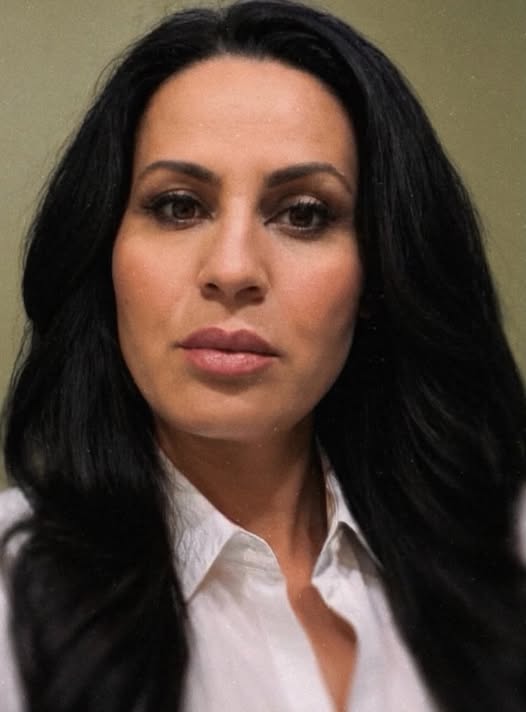
Luljeta Lleshanaku
Photo by Soela Zani

Luljeta Lleshanaku is the Poet Laureate of Albania (2023–2025). Born in 1968 in Elbasan, she grew up under house arrest during Enver Hoxha’s Stalinist regime. She has worked as a lecturer, literary magazine editor, television writer, and researcher. She is the author of nine poetry collections in Albanian and is regarded as one of the leading voices in contemporary Eastern European poetry. Her work has been translated and published internationally. Three collections appear in English with New Directions: Fresco (2002), Child of Nature (2010), and Negative Space (2018). Negative Space received an English PEN Award and was a finalist for both the Griffin International Poetry Prize and the PEN America Literary Awards (2019). Her German collection Die Stadt der Äpfel (Carl Hanser Verlag, 2021) was recommended by the Deutsche Akademie für Sprache und Dichtung (2022). She received the European Poet of Freedom Award in 2022.

Photo by Melanie Willett

Patricio Ferrari is a polyglot poet, literary translator, and editor. He holds degrees from the Sorbonne (MAS), Brown University (MFA), and the University of Lisbon (PhD). As translator and editor, he has published more than twenty books, including the complete works of Fernando Pessoa’s three heteronyms—Alberto Caeiro, Álvaro de Campos, and Ricardo Reis—co-translated with Margaret Jull Costa, and The Galloping Hour: French Poems by Alejandra Pizarnik, co-translated with Forrest Gander (all from New Directions). In 2026 Ferrari received the Fence Modern Poets Series Prize for Mud Songs, the first volume of his Elsehere trilogy. Based in New York City since 2017, he teaches at Rutgers University–Newark and in the MFA Program at Sarah Lawrence College. Ferrari also hosts World Poetry Salon, a collaboration between Limelight Poetry (founded by Wang Yin) and the Stavros Niarchos Foundation Library of the New York Public Library.

Filed Under: LETERSI

DIMENSIONET ETNOKULTURORE DHE NARRATIVE NË ROMANIN “SHTJELLË FATESH”

April 9, 2026 by s p

PROF. ASOC. DR. ROVENA VATA MIKELI

Mirdita përbën një nga njësitë më të konsoliduara etnokulturore në veri të Shqipërisë, e njohur si pjesë e Shqipërisë së Epërme, ku ndërthuren në mënyrë organike faktorët natyrorë, historikë dhe kulturorë. Relievi i saj malor dhe organizimi tradicional i qëndrueshëm kanë krijuar një strukturë të veçantë shoqërore dhe kulturore, e cila ka garantuar ruajtjen dhe transmetimin ndërbreznor të identitetit kolektiv. Në këtë kuptim, Mirdita nuk përfaqëson vetëm një hapësirë gjeografike, por një sistem kompleks kuptimor me rëndësi të veçantë për studimet albanologjike. Nga perspektiva semantike, vetë emërtimi “Mirdita” mbart një dimension simbolik të veçantë, pasi lidhet me një formë përshëndetje të përhapur në komunikimin njerëzor. Ky aspekt e tejkalon funksionin e thjeshtë toponimik dhe i jep emërtimit një rezonancë universale, duke e shndërruar në një shenjë identitare me kuptim të zgjeruar kulturor.

Në planin gjeokulturor, elementë të tillë si Mali i Munellës funksionojnë si pika referimi jo vetëm fizike, por edhe simbolike. Roli i tyre në ndërgjegjen kolektive e tejkalon dimensionin hapësinor, duke u shndërruar në qendra rreth të cilave ndërtohen narrativa mitike dhe struktura kuptimore, që organizojnë përvojën e përditshme të komunitetit.

Një komponent themelor i identitetit të kësaj krahine është sistemi i normave zakonore, i cili mbështetet mbi një kodifikim të pashkruar të sjelljes shoqërore. Brenda këtij sistemi, fjala përfaqëson një instrument themelor komunikimi dhe njëkohësisht një bartëse të kuptimeve simbolike. 

Doket, zakonet dhe besimet kanë krijuar një univers normativ të qëndrueshëm, ku individi dhe komuniteti ndërveprojnë në mënyrë të strukturuar. Ligjërimi folklorik, etnologjik dhe gjuhësor funksionon si një mekanizëm i vazhdueshëm riprodhimi kulturor, duke siguruar vijimësinë e traditës në kohë.

Forma të tilla, si: lutjet, urimet, mallkimet dhe shprehjet frazeologjike, përbëjnë forma të institucionalizuara të komunikimit kulturor. Ato nuk janë thjesht mjete shprehje, por mekanizma për transmetimin e vlerave, normave dhe strukturave mendore ndër breza, duke kontribuar drejtpërdrejt në ndërtimin e identitetit kolektiv.

Kjo pasuri etnokulturore gjen një pasqyrim të plotë në romanin “Shtjellë fatesh” të autorit Llesh Ndoj, i cili rindërton një realitet social dhe kulturor të Mirditës, përmes rrëfimit. 

Romani “Shtjellim fatesh” ndërthur dimensionin historik, mitik dhe individual, duke krijuar një strukturë rrëfimore jo-lineare që pasqyron kompleksitetin e marrëdhënieve shoqërore dhe varësinë e individit nga sistemi normativ tradicional.

Një nga aspektet më të rëndësishme të romanit është përdorimi sistematik i toponimeve lokale. Emërtimet e hapësirave natyrore dhe vendbanimeve nuk kanë funksion thjesht simbolik, por përbëjnë elemente thelbësore të strukturës narrative dhe semiotike. Ato dëshmojnë vazhdimësinë historike të popullsisë, rrisin autenticitetin e rrëfimit dhe funksionojnë si bartëse të kujtesës kolektive, duke krijuar një lidhje organike midis hapësirës dhe zhvillimit të ngjarjeve.

Një dimension tjetër i rëndësishëm është pasqyrimi i jetesës tradicionale bjeshkë–vrri, e lidhur me praktikën e transhumancës. Kjo formë organizimi ekonomik dhe shoqëror ka ndikuar në forcimin e lidhjeve komunitare dhe në transmetimin e normave morale, duke krijuar një marrëdhënie të qëndrueshme midis njeriut dhe natyrës.

Në strukturën e romanit një rol të veçantë zënë elementet folklorike, veçanërisht këngët dhe vajtimet. Këto forma nuk funksionojnë si elemente dekorative, por si komponentë të rëndësishëm narrativë, të cilët ruajnë dhe transmetojnë kujtesën historike dhe emocionale të komunitetit. Ato përforcojnë identitetin etnokulturor dhe krijojnë një dimension simbolik, që lidh të kaluarën me të tashmen.

Romani “Shtjellë fatesh” paraqet gjithashtu një gamë të gjerë praktikash dhe normash tradicionale, që rregullojnë jetën familjare dhe shoqërore. Roli i njerkës në strukturën familjare, rregullat e trashëgimisë, marrëdhëniet ndërfisnore dhe institucionet sociale tradicionale pasqyrojnë një sistem të konsoliduar normativ, i lidhur ngushtë me të drejtën zakonore dhe dokesore. Këto elemente evidentojnë rëndësinë e nderit, përgjegjësisë morale dhe organizimit kolektiv në jetën e komunitetit.

Një dimension i veçantë i veprës është trajtimi kritik i periudhës së realizmit socialist, duke përdorur ironinë dhe satirën. Përmes humorit dhe relativizimit të diskursit ideologjik, autori evidenton kontradiktat e sistemit dhe ruan një qëndrim kritik, duke treguar rezistencën e identitetit kulturor ndaj imponimeve ideologjike.

Në pjesët përmbyllëse të romanit trajtohet përplasja midis traditës dhe modernitetit. Proceset e urbanizimit, migrimit dhe zhvillimit teknologjik, sjellin transformime të dukshme në strukturat shoqërore dhe kulturore, duke ndikuar në dobësimin e disa praktikave tradicionale dhe në ndryshimin e marrëdhënieve ndër njerëzore. Megjithatë, kujtesa kolektive dhe normat morale vazhdojnë të funksionojnë si mekanizma mbrojtës të identitetit.

Nga një perspektivë shumë disiplinore, romani përfaqëson një vepër me vlera të shumta. Ai funksionon njëkohësisht si tekst letrar, dokument etnologjik, burim folklorik dhe dëshmi e së drejtës zakonore. 

Në planin gjuhësor, vepra ruan dhe dokumenton pasurinë e dialektit mirditor, duke e shndërruar në një arkiv të rëndësishëm të trashëgimisë gjuhësore.

Nga pikëpamja letrare, romani karakterizohet nga ndërthurja e elementeve historike, mitologjike, folklorike dhe satirike, duke krijuar një univers narrativ kompleks, ku historia individuale dhe ajo kolektive bashkëjetojnë në harmoni me njëra-tjetrën. Struktura e ndërthurur e rrëfimit dhe përdorimi i gjuhës figurative i japin veprës një dimension estetik dhe interpretues të thelluar.

Si përfundim mund të themi se romani “Shtjellë fatesh”, mund të konceptohet si një “tekst-univers”, në të cilin ndërthuren gjuha, historia, folklori, e drejta dhe arti. Përmes kësaj ndërthurje, romani arrin të dokumentojë dhe të interpretojë identitetin kulturor të Mirditës, duke krijuar një urë të qëndrueshme midis së kaluarës dhe së tashmes.

Në këtë kuptim, vepra përfaqëson jo vetëm një arritje letrare, por edhe një burim të rëndësishëm për studime ndërdisiplinore, duke dëshmuar vazhdimësinë dhe aftësinë e kulturës shqiptare për t’u përshtatur pa humbur thelbin e saj.

Tiranë më datë 06 prill 2026

Filed Under: LETERSI

Shoqëria shqiptare ka nevojë të kujtojë dhe reflektojë…

April 4, 2026 by s p

Dr. Ardiana MICI/

Mbi romanin “Brenga”, të Dr. Pashko Camaj.

Kur e mora romanin në dorë dhe fillova ta shfletoj, më erdhi në mendje biseda e parë me Dr. Pashkon për nxitjen fillestare që ai pati mbi shkrimin e këtij libri: një brengë sa personale aq edhe përgjithësuese e lidhur me përvojën e një brezi të tërë shqiptarësh që jetuan diktaturën komuniste, pjesë e të cilës ndihem edhe unë. Ndërsa faqet e romanit hapeshin njëra pas tjetrës dhe historia filloi të merrte formë, ndjeva nevojën ta lexoja ngadalë, duke përthithur narrativën që shpalosej gradualisht dhe aktivizimin e të gjitha shqisave për ta përjetuar atë.

Ngjarjet e romanit “Brenga” vendosen në sfondin e instalimit të diktaturës komuniste në Shqipëri, e cila kufizoi liritë individuale, solli izolim dhe ndëshkoi kundërshtarët politikë. Libri sjell në mënyrë sintetike fakte sesi sistemi u shtri përmes një zinxhiri dënimesh që fillonte nga izolimi shoqëror, punët e rënda e të detyruara, deri tek burgimet, vrasjet dhe internime të familjeve të tëra. Qëndrimi i shkrimtarit Pashko Camaj është i qartë kundër komunizmit; kjo vihet re me përdorimin e termave të tilla si: “regjim komunist”, “diktaturë komuniste”, “parti komuniste”, dhe tek përgjegjësia që ai vendos mbi këto “për vuajtjet e shqiptarëve”. Pa synuar të përshkruajë të gjithë realitetin e jetës në komunizëm, autori përqendrohet në dy nga aspektet më të errëta të kësaj periudhe: represionin në burgje dhe arratisjen drejt botës së lirë. Në këtë mënyrë romani ndërton një panoramë dramatike të dy zgjedhjeve që kishin njerëzit përballë diktaturës: të largoheshin nga vendi apo të qëndronin e të përballeshin me pasojat.

Në qendër të romanit autori vendos dy personazhe të zakonshëm, malësorë punëtorë të rritur në ajrin e maleve, ku “besonin se do të gjenin mbrojtje” ashtu si të parët e tyre kishin gjetur historikisht mbrojtje nga pushtuesit e hershëm. Por regjimi komunist ia doli të nënshtronte edhe malet, edhe cepat më të larta e të izoluara, ku as bora e as mali nuk shërbenin më si shpëtim. Pas malit ishte kufiri, perëndimi, ikja… Pikërisht këtu lind dilema themelore e romanit: a ishte ikja shpëtim?

Narrativa e romanit zhvillohet paralelisht mes dy fateve të ndara: Nga njëra anë është drama e arratisjes dhe rrugëtimi i Toninit drejt lirisë; ndërsa nga ana tjetër drama e qëndrimit dhe kalvari i vuajtjeve të Markut në burgjet e regjimit. Asnjëra nga këto rrugë nuk është e lehtë. Rrugëtimi i Toninit është i mbushur me sakrifica dhe pasiguri, por në horizont shfaqet shpresa për një jetë të lirë. Ai fillon me arratisjen nga Shqipëria në 20 shtator 1956, në ish Jugosllavi, e vazhdon me katër vjet vuajtje në kampet jugosllave, në kushtet e pasigurisë për jetën, mungesën e identitetit dhe të përkujdesjes deri në humbjen fizike të babait. Deri tani, liria ende ishte vetëm “shpresë”. Në gusht 1960 Tonini ndërmerr arratisjen e dytë nga Kampi i Gerovës në Kroaci drejt Italisë dhe në mungesë të të atit udhëheq familjen drejt perëndimit ku për herë të parë sheh dritat e botës së lirë.

Ndërkohë, fati i Markut mbetet i mbyllur brenda mureve hermetike të burgut, ku njeriu mbështetet vetëm te forca e karakterit dhe te aftësia për të përballuar atë që autori e përshkruan si “thyerje”, por jo shkatërrim të plotë të shpirtit. Ky kontrast mes fatit të dy personazheve shndërrohet në boshtin moral të veprës dhe krijon tensionin kryesor të romanit. Kontrasti i parë është mes rrugës së lirisë dhe diktaturës dhe së dyti është midis reflektimeve filozofike të personazheve mbi fatin e tyre dhe konfliktin e brendshëm moral që i shqetëson derisa ata ritakohen.

Eshtë domethënës dialogu që autori vendos mes Markut dhe Toninit në takimin e tyre kur Marku artikulon një pjesë të dhimbjes: “Ata më lanë mua vetëm të numërueshmet”, dhe ndërsa Tonini e pyet se cilat janë këto, ai numëron ditët, hapat, njerëzit e zhdukur dhe “ lutjet që ti bën deri kur ndalon së besuari se ato vlejnë”. Në këndvështrimin filozofik, romani ngre disa pyetje të rëndësishme mbi natyrën e vuajtjes dhe të lirisë. Sa vuajtje mund të durojë njeriu duke ruajtur dinjitetin? Ku e gjenin shpresën njerëzit e privuar nga liria? A ishte liria e plotë edhe pas arratisjes? Si mund të çlirohet ndërgjegjja nga konflikti i brendshëm që buron nga zgjedhjet që individi bën në jetë? Në këtë mënyrë romani shkon përtej një historie personale dhe shndërrohet në reflektim mbi moralin, përgjegjësinë dhe lirinë njerëzore.

Ndonëse ngjarjet e kanë zanafillën në Shqipëri dhe brenda një konteksti kulturor shqiptar, prekja e temave universale, të tilla si liria, qëndrueshmëria përballë vuajtjeve, dinjiteti njerëzor, pushteti dhe diktatura e bëjnë romanin të ketë audiencë ndërkombëtare. Fenomeni i arratisjes nuk ishte vetëm shqiptar, menjëherë në vitet e para të pas LIIB shumë njerëz u larguan nga vendet ku po instaloheshin regjimet komuniste. Viti 1956, kur Tonini arratiset nga Shqipëria, shënon një rritje të të ikurve, pas disa vitesh më të qeta, kur regjimi komunist testohej nëse do të kishte atë egërsi sa në vitet e para. Më pas numri i të arratisurve erdhi duke u ulur, dhe marrë përmasa më sporadike, ndërkohë që regjimi ishte konsoliduar dhe shpresat për përmbysje të tij ishin vakur.

Kampe për strehimin e refugjatëve ishin krijuar në Greqi, Itali dhe ish Jugosllavi. Në kampet e ish-Jugosllavisë ku autori i romanit ndërton kronikën e tij bazuar tek dëshmitë e personazhit kryesor Toninit mikpritja dhe kushtet ishin më të pasigurta edhe pse Konventat Ndërkombëtare synonin të krijonin ura kalimi drejt një vendi të qetë për të jetuar. Autori e quan Kampin e Gerovas në Kroaci, “një kryqëzim të çuditshëm të historisë”, me refugjatë nga e gjithë lindja komuniste. Ëndërra dhe liria e refugjatëve identifikoheshin me Amerikën, gjë që nga konteksti historik përkon me programin e posaçëm “për të ikurit” nga vendet komuniste që Amerika ndërtoi në vitin 1948 dhe me ligjin e shpëtimit të refugjatëve në vitin 1953 mbi lejimin e tyre në Amerikë. Autori në libër përmend Kontrollin që Kombet e Bashkuara ushtronin në kampet apo Konventën e Gjenevës për refugjatët duke i qëndruar besnik të vërtetës historike. Ishin vitet 1959-1960 kur Kombet e Bashkuara shpallën Vitin Botëror të Refugjatëve dhe krijuan programin për mbylljen e kampeve të refugjatëve në Evropë.

Kësaj periudhe i përkasin kryesisht të arratisurit nga Shqipëria dhe bashkë me ta edhe Tonini i romanit me familjen e tij. Pas një kalvari pesëvjecar nëpër kampe dhe arrati, të përshkruar mjeshtërisht në roman, Tonini largohet nga kampi i refugjatëve në Itali drejt SHBA në 24 Shkurt, 1961, duke prekur ëndrrën amerikane ndërsa mbarte me vehte brengën e të lënëve pas.

Ekzistenca, nevoja për dashuri dhe liri, ndjenja e fajit dhe e përgjegjësisë dhe mbi të gjitha rezistenca njerëzore ndaj të keqes, shoqërojnë rrëfimin nga fillimi deri në fund duke e gjetur zgjidhjen tek clirimi dhe komunikimi njerëzor. Personazhet e romanit nuk janë figura të shquara apo intelektualë disidentë. Ata janë njerëz të thjeshtë që ëndërrojnë gjërat më bazike të jetës: lirinë, familjen dhe të ardhmen. Pikërisht kjo thjeshtësi i bën ata të përfaqësojnë një përvojë kolektive dhe universale. Faji i Toninit ishte trashëgimia e tij familjare, mbiemri shqetësues për regjimin, ndërsa Marku eshtë fajtori pa faj, njëlloj si malësori Marash Deda, bariu.

Gjetja e Markut si personazh është merita e shkrimtarit Camaj për të përfaqësuar atë kategori njerëzish që nuk e kuptuan pse u dënuan. Fati i brishtë i njeriut në diktaturat komuniste mund të përcaktohej edhe nga një qëndrim, një lidhje gjaku, një miqësi si e Toninit me Markun, apo edhe një gjest bujarie apo një ngjarje rastësore si bariu malësor. Bariu Marash Deda në roman, është duke shtruar sofrën sipas zakonit, kur sheh nga larg njerëz që vijnë në lartësitë e izoluara të maleve të tij. Duke hapur derën për ta e duke thënë “Mirse u ka pru Zoti”, ai përfundon i torturuar dhe i vrarë nga sistemi që pretendonte të ndërtonte drejtësi duke shpalosur absurditetin dhe brutalitetin e vetë sistemit. Faji i vetëm i bariut ishte mirësia njerëzore. Por sistemi nuk kërkonte arsye, kur nuk i gjente, ai i shpikte vetë. Fate të ngjashme gjenden pothuajse në çdo familje shqiptare. Edhe pse kundërshtarët e hapur të regjimit dukeshin më të paktë, sistemi i përgjegjësisë kolektive bënte që ndëshkimi të përhapej përmes lidhjeve familjare dhe shoqërore, duke përfshirë shumë më tepër njerëz sesa imagjinohej.

Romani karakterizohet nga një stil narrativ i qetë, por emocionalisht i ngarkuar. Gjuha e thjeshtë u është përshtatur natyrës dhe formimit të personazheve.

Autori përdor me mjeshtëri metafora, simbolika dhe imazhe shqisore që e përfshijnë lexuesin në përjetimin e historisë. Përmes rrëfimit të ndërtuar me kujdes, gjuhës së pasur dhe sidomos përshkrimeve të hollësishme të detajeve, aromave, ngjyrave dhe tingujve, autori krijon një përvojë të fuqishme shqisore dhe emocionale dhe një atmosferë bindëse që synon të zgjojë empati te lexuesi. Kjo qartësi stilistike dhe aftësia tregimtare e bëjnë romanin të lexohet me interes dhe të nxisë reflektim. Lexuesi përfshihet thellësisht në përjetimet e personazheve, duke ndarë me ta ankthin, dilemën dhe brengën që mbartin. Për lexuesin shqiptar, romani prek edhe kujtesën personale dhe familjare. Gjatë leximit, është e vështirë të mos kujtosh histori të ngjashme nga familja ose rrethi i afërt. Arratisja ishte një krim që shpesh ndëshkonte më shumë familjen e mbetur në atdhe. Punët e rënda, kufizimi i arsimimit dhe stigma shoqërore ishin vetëm fillimi i pasojave, të cilat në shumë raste pasoheshin nga internimi dhe burgimi. Në memorien time vjen ashtu si në librin “Brenga”, kamioni i internimit, apo marrja e fëmijeve direkt nga shkolla, ndërsa më pas dëgjoheshin pëshpëritjet; “do ti internojnë”.

Romani hedh dritë mbi përvojat më të dhimbshme të individëve gjatë periudhës së diktaturës komuniste, përvoja që për një kohë të gjatë mbetën të pazëshme. Letërsia e realizmit socialist nuk përcillte vërtetësi, kështu që këto dhimbje kanë qenë të kycura mes vuajtësve dhe shkaktarëve të tyre. Edhe pas rënies së regjimit, të persekutuarit nuk e patën audiencën e duhur për të bërë të njohur të vërtetat e tyre. Sistemi i shkatërruar nxitonte të gjente zgjidhjet për mbijetesë dhe për tu përshtatur kushteve të reja, ndërsa të vuajturit përpiqeshin të gjenin kohën e humbur për të ndërtuar jetët e tyre, pa bërtitur dhe me ato forca që u kishin mbetur.

Përmes personazhit të Markut, autori trajton dimensione të thella të natyrës njerëzore, të tilla si qëndrueshmëria, dinjiteti njerëzor edhe në vuajtje, por edhe rrezikun e rrëshqitjes drejt fajësimit, hakmarrjes apo urrejtjes. Dr. Camaj me mjeshtëri e kanalizon dhimbjen drejt komunikimit, kujtesës dhe faljes. Kur Marku i thotë në letrën e tij Toninit, “nëse më mban mend, dmth që ia ka vlejtur” ndërton bazën e komunikimit përmes të cilës çlirohet brenga, ndjesia e fajit, energjia e mbledhur në vite dhe realizohet falja. Pema e gështenjës, e cila shfaqet në fillim dhe në fund të rrëfimit simbolizon paqen që njeriu gjen në natyrë dhe çlirimin që vjen nga komunikimi i ndjenjave.

Vepra e Dr. Pashko Camaj përcjell një mesazh të rëndësishëm për nevojën e ndërgjegjësimit shoqëror dhe të njohjes së të vërtetës historike.

Shoqëria shqiptare ka nevojë të kujtojë dhe reflektojë, pasi në emër të frikës nga hakmarrja apo urrejtja, ajo i la të vuajturit në hije. Madje në disa rrethe shoqërore dhe intelektuale artikulohej mendimi se “të gjithë kishin vuajtur në sistemin komunist, pasi të gjithë jetonin nën diktaturë”. Diktatura ishte korniza ku ishte mbërthyer vendi, ku edhe xhelati jetonte në izolim dhe palumturi, por nën dritën e fakteve të njohura, tashmë është e qartë se nuk kanë vuajtur të gjithë njësoj.

Në kontrast me atë qëndrim, romani Brenga kontribuon në ndërtimin e një letërsie të kujtesës, e cila synon të ruajë të vërtetën, të nxisë reflektimin dhe ti shërbejë kombit që ngjarje të tilla të mos përsëriten në të ardhmen. Edhe pse titulli i tij flet për dhimbjen dhe brengën, romani në thelb është një homazh për qëndrueshmërinë njerëzore, për aftësinë e njeriut për të ruajtur dinjitetin dhe vlerat përballë një sistemi të ndërtuar për ti shkatërruar ato. Autori i qëndron besnik të vërtetës historike, si në zhvillimet jashtë Shqipërisë ashtu edhe brenda saj, duke e shndërruar romanin në një burim të rëndësishëm për njohjen e së kaluarës. Ai nxit jo vetëm kujtesën, por edhe mendimin kritik dhe reflektimin më të thellë e më të ndjeshëm, shpesh më të fuqishëm sesa ai që ofrohet nga tekstet shkollore të historisë. Në letërsinë që trajton temat e identitetit, emigrimit dhe traumës historike, “Brenga” do të zërë një vend të çmuar si dëshmi artistike dhe njerëzore e një periudhe nga më të vështirat e historisë shqiptare.

Filed Under: LETERSI

MËKATET E ZONJËS EMA

April 3, 2026 by s p

Eduart Sulollari/

Tronditës. Si një ortek tek merr me vete frymën e dimrit. Aspak pendim, ndërgjegjës se po luaja me tradhti të vockla, verbuar nga krenaria. Pata mbyllur fletën e fundit të romanit “Mëkatet e zonjës Eva” të Mirela Kanini. Emër që askund nuk e pata hasur rrugëtimit të leximeve. Vjen dhe më shastis, “dhe të kontrolloja emocionet e mia të çakërdisura” shpotit thekur Kanini, hyrjes së romanit. Përpiqet të të shkatërrojë çastin e endjes që në nisje. Gjuhë e shkathët. Kërcitëse. Dhimbje që shkund tendën rehati me dialogë ulëritës. Është grisur cipa e natës që doje të të mbështillte strehës së ëndërrimit. Eva ka takuar Tonin. Zemra e tij e pret. Ka etjen përvëluese të shkretëtirës. Eva vetë, zjarri i tempullit.

Gëzim puritan, “si ujvarë e vogël që thyente qetësinë e thellë” citon Kanini. “I puthja lotët duke mos mbajtur të miat”. Janë në territorin e prehjes së dehur. Melankoli ëndërrimtare tretur takimit të prushtë, pastaj mbërrin rrokada tinzare e autores. Djeg gjasme e pakujdesshme rrëfimin, lë në hije Tonin. Eva, i duhet një telefonatë me Benin, bashkëshortin, por zë femre i është gjegjur përtej oqeanit. Ngashërimit gati paralizohet.

“U ndjeva e tradhtuar”. Sapo ndeshi pakujdesinë shkatërruese të tij. Kacavirret trishtimit. Je peng i trillit të Kaninit tashmë. Të hedh. Të përplas. Herë në të shkuarën. Herë në të tashmen e të paktëve personazhe të vet. Ka shkelur me kohë tokën e çoroditjes tënde. Harruar je të panjohurës. Të gllabëron faqe pas faqe. Në ajrin e thatë të natës loti yt ujit rrëfimin e Evës adoleshente. Zhbën varfërinë e dhjamosur të frazave bajate ndaj ngjarjeve të rëndomta. Kurthe. Gracka. Nuk guxon të gabojë në shtegun ku të ka degdisur mëkati i Evës.

Gati e mallkoj Kaninin tek zhvat orët e mia të mesnatës me truket si të magjistricave shtatzëna. Drama e ndarjes së prindërve shpon si kamë trinën e tëndit kraharor. Gjoksi ulet e ngrihet si dunë grindavece. Ditët e enjtura me mllefin e urrejtjes karshi babait humbës. Pastaj ndihet trok gëzimi – lindja e vajzës, por Kanini gati ka kamxhikun e torturës. Godet me të tjera të papritura. Kthesat dinake janë aty me të fshehtat tinzare që si prestidigjator endacak kalb pagjumësinë. Toni ka arritur në Amerikë. Eva përplaset dyerve të rënda të divorcit. Faqe të tëra me dramë.

Tashmë je i paralizuar. Lakmia e Kaninit të hodhi rrjetën. Të ka bërë për ujë të ftohtë edhe atë pak qëndresë se do t’i lësh pa lexuar faqet që të kanë mbetur. Mos po më merr për të lajthitur. Të tregova kaq shumë? Apo për t’u afruar tek errësira gjerb dritën e agut dhe unë të rri ende me ty?

Hej?!? Para kam “Për pak dashuri” “Trafikanti”

“Mallkimi i Mellonëve” “Arratisje” dhe “Klienti”, romane të tjera të Mirela Kaninit.

Filed Under: LETERSI

  • « Previous Page
  • 1
  • …
  • 10
  • 11
  • 12
  • 13
  • 14
  • …
  • 312
  • Next Page »

Artikujt e fundit

  • PËRBALLË PROTESTAVE NË TIRANË DHE KRIZËS SË DEMOKRACISË, KUJTOJMË PROFESOR ARSHI PIPËN
  • 𝐒𝐭𝐚𝐭𝐮𝐣𝐚 𝐞 𝐏𝐞𝐫𝐚𝐧𝐝𝐨𝐫𝐢𝐭 𝐧𝐞̈ 𝐃𝐮𝐫𝐫𝐞̈𝐬: 𝐀 𝐞̈𝐬𝐡𝐭𝐞̈ 𝐯𝐞̈𝐫𝐭𝐞𝐭 𝐍𝐞𝐫𝐨𝐧𝐢?
  • Kandidate për Këshillin e Qytetit të Mississaugës në Kanada, Mendi Kabashi: “Suksesi i çdo shqiptari është krenari për të gjithë ne”
  • Announcing our AAWO “Motrat Qiriazi” Organization: New President, Eva Milo Burnazi
  • Tre mësime që na ofron ndryshimi i kryeministrave në Mbretërinë e Bashkuar
  • Përkujtojmë sot në ditën e tij të lindjes shkrimtarin dhe poetin Martin Camaj
  • Kasëm Trebeshina, poeti kundër rrymës
  • Bardi i modernizmit në poezinë shqipe
  • Riviera Shqiptare, destinacioni i ri i investimeve në Mesdhe
  • Vepra “Shqipëria, e kaluara dhe e tashmja” si kontribut i Kostë Çekrezit për historinë e Shqipërisë e shqiptarëve
  • Albanians For America (AFA) was honored to participate on Capitol Hill for the first time as Albania’s representative within the Central and East European Coalition
  • “Dasma shkodrane”, thesari artit shqiptar, ikona e Kol Idromenos, piktura që përjetësoi në ngjyra shpirtin e qytetit
  • 20 korrik 1883, në Koriliano Kalabro doli në shtyp revista e përmuajshme politike, shoqërore, kulturore e letrare “Flamuri i Arbërit”
  • PROJEKTI I PADUKSHËM I SPASTRIMIT ETNIK NËPËRMJET INXHINIERISË SË IDENTITETIT
  • GJURMËT E SHQIPËRISË ETNIKE NË SHTYPIN EUROPIAN

Kategoritë

Arkiv

Tags

albano kolonjari alfons Grishaj Anton Cefa arben llalla asllan Bushati Astrit Lulushi Aurenc Bebja Behlul Jashari Beqir Sina dalip greca Elida Buçpapaj Elmi Berisha Enver Bytyci Ermira Babamusta Eugjen Merlika Fahri Xharra Frank shkreli Fritz radovani Gezim Llojdia Ilir Levonja Interviste Keze Kozeta Zylo Kolec Traboini kosova Kosove Marjana Bulku Murat Gecaj nderroi jete ne Kosove Nene Tereza presidenti Nishani Rafaela Prifti Rafael Floqi Raimonda Moisiu Ramiz Lushaj reshat kripa Sadik Elshani SHBA Shefqet Kercelli shqiperia shqiptaret Sokol Paja Thaci Vatra Visar Zhiti

Log in

This website uses cookies to improve your experience. We'll assume you're ok with this, but you can opt-out if you wish. Cookie settingsACCEPT
Privacy & Cookies Policy

Privacy Overview

This website uses cookies to improve your experience while you navigate through the website. Out of these cookies, the cookies that are categorized as necessary are stored on your browser as they are essential for the working of basic functionalities of the website. We also use third-party cookies that help us analyze and understand how you use this website. These cookies will be stored in your browser only with your consent. You also have the option to opt-out of these cookies. But opting out of some of these cookies may have an effect on your browsing experience.
Necessary
Always Enabled
Necessary cookies are absolutely essential for the website to function properly. This category only includes cookies that ensures basic functionalities and security features of the website. These cookies do not store any personal information.
Non-necessary
Any cookies that may not be particularly necessary for the website to function and is used specifically to collect user personal data via analytics, ads, other embedded contents are termed as non-necessary cookies. It is mandatory to procure user consent prior to running these cookies on your website.
SAVE & ACCEPT