• Home
  • Politics
  • Opinion
  • Culture
  • Sports
  • Economy
  • Interview
  • Reporting
  • Community
  • Vatra

Dielli | The Sun

Albanian American Newspaper Devoted to the Intellectual and Cultural Advancement of the Albanians in America | Since 1909

BEYOND THE NOISE: TO WHOM SHOULD ALBANIANS LISTEN?

June 6, 2026 by s p

“The trouble with the world is that the stupid are cocksure and the intelligent are full of doubt.” — Bertrand Russell.

Cafo Boga, M.S. Diplomacy

New York, June 5, 2026

The demonstrations taking place in Tirana have evolved into something far greater than a simple protest. Day after day, they attract more participants not only from every region of Albania, but also from Albanian communities throughout the Balkans and the diaspora around the world. This growing mobilization reflects a deep sense of concern among many citizens regarding the direction of the country, the management of public and protected lands, the preservation of cultural and historical heritage, and the concentration of power in the hands of a few individuals.

Whether one agrees with every accusation or every demand is almost beside the point. The significance of these demonstrations lies in the fact that a substantial number of Albanians feel that their voices are not being heard. Yet while the reasons behind the protests are relatively clear, another question remains unanswered: To whom should Albanians listen?

In today’s world, everyone has a microphone. Social media has democratized public discourse in ways unimaginable only a generation ago. This development has many virtues. It allows ordinary citizens to challenge powerful interests, expose wrongdoing, and participate directly in public debate.

Yet it also creates a new challenge. When everyone speaks at the same time, how do we distinguish knowledge from speculation, expertise from activism, facts from rumors, and public interest from political opportunism? The late Italian philosopher Umberto Eco warned that modern communication technologies had largely eliminated the traditional filters that once separated informed judgment from uninformed opinion. His concern was not that ordinary people were speaking. His concern was that society was losing its ability to distinguish between those who know and those who merely claim to know.

This dilemma is visible in Albania today.

Government officials present one narrative. Opposition parties offer another. Developers, environmentalists, historians, economists, architects, journalists, local residents, and foreign investors all claim to speak in the national interest. Each side presents its own facts, experts, and interpretations. Caught in the middle is the ordinary citizen, who must decide whom to believe.

The answer cannot be to silence anyone. Nor can it be to assume that every opinion carries equal weight. A healthy democracy depends on free expression, but it also depends on informed judgment. The voices that deserve the greatest attention are not necessarily the loudest, the most emotional, or the most politically connected. They are the voices willing to provide evidence, accept scrutiny, acknowledge complexity, and place the long-term interests of the nation above short-term political gains.

As the demonstrations continue to grow while the government maintains its grip on power, Albania faces a potentially dangerous moment. History teaches that when a large popular movement meets a government unwilling or unable to engage meaningfully with public concerns, tensions can escalate beyond anyone’s intentions. This does not mean that either side should prevail through force or intimidation. On the contrary, both sides must recognize that preserving national unity is more important than winning a political battle.

The government should understand that control is not the same as consent. Even if it possesses the legal authority to govern, large and persistent demonstrations are a signal that a significant portion of society feels ignored. The wisest governments are not those that never face criticism, but those that know when to listen.

Likewise, the protesters must understand that the greatest strength of any civic movement is its moral legitimacy. The moment peaceful protest gives way to violence, destruction, or vengeance, the movement risks losing the very credibility that gave it strength.

Under such circumstances, many will inevitably ask whether new elections should be considered.

In a democracy, elections are often the most legitimate mechanism for resolving a crisis of confidence between the governed and those who govern. If the gap between the government and a significant portion of society continues to widen, then all constitutional solutions—including early elections—should remain on the table.

However, elections alone do not solve structural problems. Albania’s challenges are deeper than any single government or any single electoral cycle. Questions of transparency, property rights, institutional accountability, environmental protection, economic opportunity, and public trust will remain regardless of who wins the next election.

This reality leads to an even more fundamental question. If many citizens have lost confidence not only in the current government but also in the traditional opposition, is Albania’s future to be found in the emergence of a new political force?

Perhaps.

But history teaches that new political parties are not necessarily the answer. Many movements are successful in mobilizing public anger, yet fail when asked to govern. They know what they oppose, but not what they wish to build. The challenge facing Albania is therefore not simply whether a new political party should emerge from these demonstrations. The deeper question is whether a new political culture can emerge.

For more than three decades, Albanian politics has largely been dominated by the same political forces, the same rivalries, and often the same personalities. If citizens increasingly believe that neither side offers a convincing vision for the future, then a political realignment may indeed become inevitable.

Yet Albania should be careful not to confuse new faces with new ideas.

A movement born from civic frustration will deserve support only if it offers more than criticism. It must present a credible vision of governance, economic development, institutional reform, transparency, environmental stewardship, and national unity. Otherwise, it risks becoming merely another chapter in the same political story.

Perhaps the most valuable outcome of these demonstrations would not be the rise of another charismatic leader or another political party. Perhaps the real opportunity is the emergence of a new generation of leadership committed to strengthening institutions rather than personalities, laws rather than individuals, and national interests rather than partisan loyalties.

It is also important to remember that despite its many shortcomings, Albania has made remarkable progress since the collapse of communism. The country has joined NATO, advanced toward European Union membership, to some extend built democratic institutions, expanded individual freedoms, modernized much of its infrastructure, and strengthened its ties with the democratic world. These achievements do not belong to any single government, party, or leader. They are the result of the resilience, sacrifice, and determination of the Albanian people themselves. As Albanians debate the future, they should do so with confidence in what they have already achieved and with a shared commitment to preserving and improving those accomplishments.

The future of Albania will not be determined merely by who wins a particular political battle. It will be determined by whether Albanians can create a culture that values facts over slogans, expertise over propaganda, and reason over outrage.

The demonstrations in Tirana are therefore about more than land, development projects, or politics. They are a test of Albania’s civic maturity. They force us to confront a fundamental question: In an age when everyone can speak, who is still willing to listen, think, and judge wisely?

The answer to that question may matter far more than the outcome of any single protest, election, or political dispute. The true challenge facing Albania today is not simply changing governments. It is building a political culture capable of producing better government, regardless of who happens to hold power.

Only then will Albania move beyond the noise.

“The greatest enemy of knowledge is not ignorance, it is the illusion of knowledge.”

—Bertrand Russell.

Filed Under: Emigracion

National Defense Authorization Act (NDAA) for Fiscal Year 2027 Approved

June 6, 2026 by s p

AFA

Strategic Importance of KFOR for the Stability of Kosovo and the Western Balkans Reaffirmed

The U.S. House Armed Services Committee (HASC) has approved the National Defense Authorization Act (NDAA) for Fiscal Year 2027 and advanced the approximately $1.15 trillion defense policy bill for further consideration by the House of Representatives. The legislation was approved following a marathon committee session during which nearly 900 amendments were considered. The final committee vote passed with a margin of 44–12, receiving support from all Republican members and nearly half of the Democratic members.

As part of this legislation, particular emphasis was placed on the strategic importance of the United States’ contribution to the NATO-led peacekeeping mission in Kosovo, KFOR, as a key element in maintaining stability in the Western Balkans and safeguarding regional security. According to an amendment proposed by Congressman William R. Keating, the strong U.S. contribution to KFOR plays a vital role in supporting lasting peace and strengthening a democratic Kosovo. It also reflects broader U.S. strategic security and diplomatic interests in the region.

The committee has further directed the Under Secretary of Defense, in coordination with the United States European Command (EUCOM), to submit a comprehensive report to Congress by March 1, 2027, regarding the U.S. contribution to KFOR.

The report will assess the period since the establishment of the mission, evaluate whether current capabilities align with operational requirements, examine the impact of the U.S. contribution on the stability of the Western Balkans and American interests in Kosovo, analyze the potential consequences of reducing the U.S. presence within the mission, and review the perceptions of both Kosovo and Serbia regarding the role of the United States in KFOR.

This development reaffirms the continued importance of U.S. engagement in Kosovo and its contribution to peace, stability, and security throughout the Western Balkans.

Albanians for America has built a longstanding and direct working relationship with the team of Congressman William R. Keating, Ranking Member of the Europe Subcommittee within the House Foreign Affairs Committee. Over the years, this cooperation has focused on advancing issues of importance to the Albanian-American community and strengthening U.S. engagement in the Western Balkans.

Filed Under: Emigracion

Kosova drejt NATO-s, objektiv strategjik dhe ofensivë diplomatike

June 5, 2026 by s p

Prof. Dr. Muhamet Racaj/

Deklarata e fundit e kongresistit amerikan Keith Self, kryetar i Nënkomitetit për Evropën në Dhomën e Përfaqësuesve të Shteteve të Bashkuara të Amerikës, se Kosova duhet të bëhet pjesë e NATO-s dhe se angazhimi amerikan në Ballkanin Perëndimor duhet të vazhdojë, nuk është thjesht një deklaratë politike e zakonshme. Ajo paraqet një mesazh të qartë strategjik që vjen nga një prej qendrave më të rëndësishme të vendimmarrjes në botë dhe që duhet të lexohet me kujdes nga institucionet e Kosovës, por edhe nga faktorët rajonalë.

Në kohën kur arkitektura e sigurisë evropiane po përballet me sfida të mëdha pas agresionit rus në Ukrainë, Ballkani Perëndimor po rikthehet në vëmendjen e strategëve perëndimorë si një rajon ku stabiliteti duhet të ruhet dhe të forcohet. Pikërisht në këtë kontekst, Kosova shihet gjithnjë e më shumë si një faktor i rëndësishëm i sigurisë rajonale dhe jo thjesht si një çështje e pazgjidhur politike. Mbështetja amerikane për integrimin euroatlantik të Kosovës ka qenë konstante që nga përfundimi i luftës së vitit 1999. Megjithatë, deklaratat e nivelit të lartë në periudhën aktuale kanë një peshë të veçantë, sepse ato lidhen drejtpërdrejt me nevojën e NATO-s për të forcuar krahun e saj juglindor dhe për të parandaluar ndikimet destabilizuese që mund të vijnë nga aktorë të jashtëm.

Anëtarësimi i Kosovës në NATO nuk është vetëm aspiratë politike. Ai përfaqëson një objektiv strategjik që do të kontribuonte drejtpërdrejt në stabilitetin e Ballkanit Perëndimor. Për NATO-n, integrimi i Kosovës do të nënkuptonte mbylljen e një hapësire të ndjeshme gjeostrategjike në zemër të rajonit, ndërsa për Kosovën do të përbënte garancinë më të fuqishme të sigurisë kombëtare dhe të sovranitetit shtetëror.

Në vitet e fundit, institucionet e sigurisë së Kosovës kanë shënuar progres të konsiderueshëm në transformimin e kapaciteteve të tyre mbrojtëse. Forca e Sigurisë së Kosovës është në proces të vazhdueshëm modernizimi, duke u orientuar sipas standardeve dhe doktrinave të NATO-s. Bashkëpunimi me SHBA-në, me vendet anëtare të Aleancës dhe pjesëmarrja në stërvitje të përbashkëta kanë rritur profesionalizmin dhe ndërveprueshmërinë e forcave kosovare.

Megjithatë, rruga drejt NATO-s mbetet sfiduese. Pesë shtete anëtare të Aleancës ende nuk e kanë njohur pavarësinë e Kosovës, gjë që e komplikon procesin e anëtarësimit. NATO funksionon mbi bazën e konsensusit dhe çdo vendim për zgjerim kërkon miratimin unanim të të gjitha vendeve anëtare.

Kjo do të thotë se mbështetja amerikane, ndonëse vendimtare, nuk është e mjaftueshme në vetvete. Kosova duhet të vazhdojë një ofensivë diplomatike të mirëorganizuar për të bindur shtetet mosnjohëse se integrimi i saj në NATO është në interes të sigurisë së përbashkët euroatlantike. Diplomacia duhet të ecë paralelisht me reformat në sundimin e ligjit, zhvillimin demokratik dhe forcimin e kapaciteteve mbrojtëse.

Historia e NATO-s tregon se kur ekziston vullnet politik dhe interes strategjik, Aleanca ka ditur të gjejë zgjidhje kreative edhe për sfida të ndërlikuara politike. Në këtë kuptim, deklarata e kongresistit Keith Self mund të shihet si pjesë e një procesi më të gjerë të konsolidimit të mbështetjes ndërkombëtare për perspektivën euroatlantike të Kosovës.

Për Kosovën, kjo është një mundësi që nuk duhet humbur. Institucionet shtetërore duhet ta shfrytëzojnë këtë momentum për të intensifikuar bashkëpunimin me partnerët strategjikë, për të forcuar më tej sektorin e mbrojtjes dhe për të ndërtuar një diplomaci aktive që do ta afrojë vendin me objektivin e anëtarësimit në NATO.

Në fund, mesazhi që vjen nga Uashingtoni është i qartë: Kosova vazhdon të gëzojë mbështetje të fuqishme në qarqet politike amerikane dhe mbetet pjesë e vizionit strategjik perëndimor për një Ballkan të qëndrueshëm, të sigurt dhe plotësisht të integruar në strukturat euroatlantike. Sfida tani është që kjo mbështetje të shndërrohet në rezultate konkrete politike dhe diplomatike që do ta afrojnë Kosovën me familjen euroatlantike ku historikisht dhe gjeopolitikisht i takon.

Filed Under: Emigracion

NATO pas Reduktimit të Pranisë Ushtarake Amerikane në Evropë

June 4, 2026 by s p

Prof. Dr. Muhamet Racaj/

Sfidat, Transformimi dhe Arkitektura e Re e Sigurisë Euroatlantike.

Njoftimi se Shtetet e Bashkuara të Amerikës po shqyrtojnë reduktimin gradual të një pjese të kapaciteteve të tyre kryesore ushtarake të dislokuara në Evropë përfaqëson një nga zhvillimet më domethënëse strategjike për sigurinë euroatlantike që nga përfundimi i Luftës së Ftohtë. Edhe pse Uashingtoni mbetet shtylla kryesore e NATO-s, ky sinjal politik dhe ushtarak po nxit debate serioze mbi mënyrën se si do të funksionojë Aleanca në dekadat e ardhshme dhe nëse Evropa është e gatshme të marrë përgjegjësi më të mëdha për mbrojtjen e saj.

Lufta në Ukrainë ka ndryshuar rrënjësisht perceptimin e kërcënimeve në Evropë. Agresioni rus ka rikthyer luftën konvencionale në kontinent, ndërsa operacionet hibride, sulmet kibernetike, dezinformimi dhe kërcënimet bërthamore kanë krijuar një mjedis të ri sigurie. Në këtë realitet të ri, NATO është përballur me nevojën për të rritur gatishmërinë operacionale, për të zgjeruar praninë në krahun lindor dhe për të forcuar aftësitë e saj parandaluese.

Nëse SHBA-ja redukton gradualisht një pjesë të bombarduesve strategjikë, avionëve luftarakë, mjeteve ajrore pa pilot, nëndetëseve dhe anijeve luftarake në Evropë, kjo nuk do të thotë automatikisht dobësim i NATO-s. Përkundrazi, aleanca ka filluar tashmë procesin e transformimit të saj drejt një modeli ku shtetet evropiane marrin rol më aktiv në garantimin e sigurisë së përbashkët.

Pyetja kryesore nuk është nëse NATO do të mbijetojë pa një pjesë të kapaciteteve amerikane në Evropë, por sa shpejt Evropa mund të kompensojë boshllëqet e krijuara. Aktualisht, SHBA-ja siguron pjesën më të madhe të aftësive strategjike të aleancës, përfshirë inteligjencën satelitore, transportin strategjik, mbrojtjen raketore, komandimin operacional dhe parandalimin bërthamor. Këto janë kapacitete që shumica e vendeve evropiane nuk i posedojnë në nivel të mjaftueshëm.

Pikërisht për këtë arsye, Gjermania, Polonia, Franca dhe vende të tjera evropiane kanë filluar programet më të mëdha të modernizimit ushtarak në historinë e pasluftës. Gjermania po investon qindra miliarda euro në forcat e saj të armatosura, ndërsa Polonia po ndërton një nga ushtritë më të fuqishme tokësore në Evropë. Këto investime nuk janë vetëm reagim ndaj luftës në Ukrainë, por pjesë e një strategjie afatgjatë për të rritur autonominë mbrojtëse evropiane.

Njëkohësisht, NATO po zhvendos qendrën e saj operative drejt krahut lindor. Rumania, Polonia, Bullgaria dhe shtetet baltike janë shndërruar në pika kyçe të mbrojtjes kolektive. Veçanërisht rajoni i Detit të Zi po fiton rëndësi strategjike të jashtëzakonshme, pasi përfaqëson një nga zonat ku interesat e NATO-s dhe Rusisë përplasen më drejtpërdrejt.

Nga perspektiva ushtarake, aleanca do të vazhdojë të funksionojë mbi bazën e Nenit 5 të Traktatit të Uashingtonit, i cili mbetet garancia themelore e sigurisë kolektive. Edhe në rast të zvogëlimit të pranisë ushtarake amerikane, mekanizmat e komandimit, planifikimit operacional dhe mbrojtjes kolektive do të mbeten funksionalë. Megjithatë, barra financiare dhe ushtarake do të zhvendoset gjithnjë e më shumë drejt vendeve evropiane.

Një sfidë shtesë lidhet me mundësinë e përshkallëzimit të tensioneve me Rusinë. Sulmet e përsëritura pranë kufijve të NATO-s dhe incidentet që mund të prekin territorin e vendeve anëtare krijojnë rrezik për keqllogaritje strategjike. Në rast të cenimit të territorit të një shteti anëtar, aleanca do të përballet me detyrimin për të demonstruar kredibilitetin e saj dhe për të ruajtur efektin parandalues ndaj çdo kundërshtari potencial.

Në aspektin afatgjatë, NATO pritet të evoluojë nga një aleancë ku SHBA-ja mbart pjesën dominuese të barrës ushtarake, në një model më të balancuar transatlantik. Kjo nuk nënkupton largim amerikan nga Evropa, por rikonfigurim të prioriteteve strategjike të Uashingtonit, veçanërisht në raport me konkurrencën globale në rajonin Indo-Paqësor.

Për vendet e Ballkanit Perëndimor, ky zhvillim ka rëndësi të veçantë. Stabiliteti rajonal do të varet gjithnjë e më shumë nga aftësia e vendeve evropiane për të ruajtur kohezionin e NATO-s dhe për të garantuar sigurinë në kufijtë juglindorë të aleancës. Kosova, Shqipëria, Mali i Zi dhe Maqedonia e Veriut duhet të vazhdojnë modernizimin e kapaciteteve të tyre mbrojtëse dhe të forcojnë bashkëpunimin me strukturat euroatlantike.

Përfundim

Reduktimi gradual i një pjese të arsenalit amerikan në Evropë nuk nënkupton fundin e dominimit strategjik të NATO-s, por hyrjen e aleancës në një fazë të re transformimi. NATO do të vazhdojë të mbetet organizata më e fuqishme ushtarake në botë, por me një rol më të madh të vendeve evropiane në mbrojtjen kolektive. Në kushtet e tensioneve të vazhdueshme me Rusinë dhe pasigurive globale, sfida kryesore për Evropën nuk është vetëm rritja e shpenzimeve ushtarake, por ndërtimi i kapaciteteve reale për të garantuar sigurinë e saj në mënyrë më autonome, duke ruajtur njëkohësisht partneritetin strategjik me Shtetet e Bashkuara të Amerikës.

Foto: https://tdhj.org

Filed Under: Emigracion

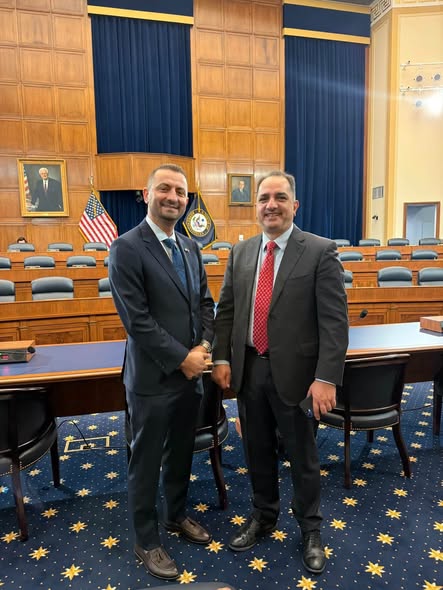
Albanians For America was pleased to meet yesterday for lunch with Chris Gober, Republican candidate for the U.S. House of Representatives in Texas’ 10th Congressional District

June 3, 2026 by s p

AFA/

Our relationship with Chris goes back to the very beginning of AFA. Through his law firm, Lex Politica, Chris has served as legal counsel to our organization and played an important role in helping establish the foundation that has allowed AFA to grow into a leading national Albanian-American advocacy organization. We are grateful for his friendship, guidance, and continued support.

During our discussion, Chris shared his vision for the future of America and highlighted the incredible technology ecosystem developing throughout the Austin region. He spoke about the importance of ensuring the United States remains the global leader in artificial intelligence, robotics, space exploration, advanced manufacturing, and emerging technologies. His focus on innovation, economic competitiveness, and national security reflects the type of forward-thinking leadership needed to keep America at the forefront of the 21st century.

AFA believes that America’s leadership in these fields is critical not only for economic growth, but also for maintaining our strategic advantage and protecting our national security in an increasingly competitive world. Conversations that bring together community leaders, policymakers, and innovators are essential as we prepare for the opportunities and challenges ahead.

We thank Adrian Doko, Nino Rata, and Gino Mulliqi for joining the meeting and sharing their perspectives as Albanian Americans on the importance of civic engagement, economic opportunity, and strengthening the relationship between our communities and elected leaders.

We look forward to continuing our strong working relationship with Chris Gober and wish him success as he continues his campaign for Congress.

Filed Under: Emigracion

  • « Previous Page
  • 1
  • 2
  • 3
  • 4
  • …
  • 194
  • Next Page »

Artikujt e fundit

  • 13 QERSHOR 1912, VATRA U NJOH NGA SHTETI AMERIKAN I MASSACHUSETTS
  • Kujtojmë me nderim albanologun e shquar francez Pierre Cabanes në ditën e ndarjes nga jeta
  • DRITA E PËRNDRITËSHME E SHÊJZAVE TË KOLIQIT
  • FAN NOLI, AT GJERGJ FISHTA, FAIK KONICA DHE AMERIKA NË 250-VJETORIN E SAJ
  • Fshirja e trashëgimisë kulturore dhe historike e Çamërisë dhe ndryshimet toponimike – shprehje e qartë e negacionizmit të qeverisë greke
  • KUR JETA BËHET DOKUMENT HISTORIE
  • SHQIPTARËT NUK DUHET TË LEJOJNË PËRMBYSJEN E SISTEMIT TË VLERAVE
  • TIRANA USHTON: POSHTË KOMUNIZMI!
  • Protesta “Made in Albania”…
  • JOHN FITZGERALD KENNEDY: PRESIDENTI QË E BËRI NJË BREZ TË BESONTE SE MUND TË NDRYSHONTE BOTËN
  • Gëzuar 114-vjetorin e VATRËS!
  • Analizë gjeografike, demografike dhe statistikore e popullsisë së Çamërisë në fillim të Shekullit XX
  • FRANKLIN DELANO ROOSEVELT: PRESIDENTI QË SHPËTOI AMERIKËN NGA DEPRESIONI DHE E UDHËHOQI BOTËN DREJT FITORES
  • NERONI, PUSHTETI PERSONAL DHE BREZI QË NUK HESHT MË
  • REVOLTË APO REVOLUCION?

Kategoritë

Arkiv

Tags

albano kolonjari alfons Grishaj Anton Cefa arben llalla asllan Bushati Astrit Lulushi Aurenc Bebja Behlul Jashari Beqir Sina dalip greca Elida Buçpapaj Elmi Berisha Enver Bytyci Ermira Babamusta Eugjen Merlika Fahri Xharra Frank shkreli Fritz radovani Gezim Llojdia Ilir Levonja Interviste Keze Kozeta Zylo Kolec Traboini kosova Kosove Marjana Bulku Murat Gecaj nderroi jete ne Kosove Nene Tereza presidenti Nishani Rafaela Prifti Rafael Floqi Raimonda Moisiu Ramiz Lushaj reshat kripa Sadik Elshani SHBA Shefqet Kercelli shqiperia shqiptaret Sokol Paja Thaci Vatra Visar Zhiti

Log in

This website uses cookies to improve your experience. We'll assume you're ok with this, but you can opt-out if you wish. Cookie settingsACCEPT
Privacy & Cookies Policy

Privacy Overview

This website uses cookies to improve your experience while you navigate through the website. Out of these cookies, the cookies that are categorized as necessary are stored on your browser as they are essential for the working of basic functionalities of the website. We also use third-party cookies that help us analyze and understand how you use this website. These cookies will be stored in your browser only with your consent. You also have the option to opt-out of these cookies. But opting out of some of these cookies may have an effect on your browsing experience.
Necessary
Always Enabled
Necessary cookies are absolutely essential for the website to function properly. This category only includes cookies that ensures basic functionalities and security features of the website. These cookies do not store any personal information.
Non-necessary
Any cookies that may not be particularly necessary for the website to function and is used specifically to collect user personal data via analytics, ads, other embedded contents are termed as non-necessary cookies. It is mandatory to procure user consent prior to running these cookies on your website.
SAVE & ACCEPT