• Home
  • Politics
  • Opinion
  • Culture
  • Sports
  • Economy
  • Interview
  • Reporting
  • Community
  • Vatra

Dielli | The Sun

Albanian American Newspaper Devoted to the Intellectual and Cultural Advancement of the Albanians in America | Since 1909

The Inspiration behind the “The Shape of the Shadow” project…

March 14, 2021 by dgreca

Interview with Blerti Murataj: The Inspiration behind the “The Shape of the Shadow” project

By Nora Kalaja/

Well-known artist, colorist, and editor Blerti Murataj has created his own community space for artists, filmmakers, and musicians who are empowered and inspired by his creative vision. His art encourages the development of our inner sight and gives us a deeper appreciation for the world.

Blerti Murataj’s current art project is inspired by the game of absence, in this case, of the light, in a given urban and social environment. While the working title of the project is “the shape of the shadow”, its concept is a reflection of his innovative imagination that offers beauty in color and black and white.  

Blerti Murataj graduated from Art Academy in Tirana, in the department of Visual Arts in 1999. He continued his studies for Master of Fine Arts in Photography, Video and Related Media at the well known School of Visual Art (SVA) in NYC but dropped out of program in 2001 to pursue his professional dream. He has been living and working in New York City since 2000.

Blerti Murataj’s notable color grading works include: “Comedians in Cars Getting Coffee” of Jerry Seinfeld, Oprah’s “Master Class” series for OWN, “Bon Jovi: When we were beautiful” for ShowTime and Tribeca Film Festival, “Lady Gaga: Inside of the Outside” for MTV, and a list of commercial work for Nike, Verizon, McDonald, Honda, IBM, Sony, Grey Goose Vodka, just to name a few. Many of the projects he has worked on have received awards such as Emmy Award, The Clios, TED’s Ads Worth Spreading, NASA Honor Award etc., have aired in major US networks and have been part of official selection in film festivals throughout the United States.

In 2007 Blerti Murataj founded his own successful company “edit4 Inc.” dedicated to production, post-production, photography and design. (www.editfour.com)

Can you tell us a little bit about your career? How did you start your journey on this career path?

Blerti Murataj: Answering this question can take me forever to describe all my wonderful experiences. Many memories flow in my mind for each turn of the story in my life. Moving forward to film and video post-production, and lately color grading and finishing via edit4 Inc., my company, is for sure result of unavoidable desire to create and have that personal space, and the right team, to exercise it. 

Starting with production and then focusing more into editing the clips into a story and then applying finishing touches, developing the color palette like in paining, that is briefly my path.

What is most rewarding about what you do?

Blerti Murataj: It is working on projects that absorb you, traveling with them into areas of knowledge unknown before. For me this is a real treat. Also having the opportunity of viewing of what might be the highest quality of that artistic creation.

As a color grading artist or editor, which one of your previous projects do you consider your best work and why?

Blerti Murataj: Each project I have worked on has had its own challenges, concerning artistic expression or technical solutions, in terms of implementing pioneering technologies for the time of their production. Be it documentaries about Maya Angelou or Lady Gaga, journeying through American War of Independence or present-day America with comedians that make you think, visually tasting Grey Goose Vodka or fluid dancing of Honda robots, listening to “Living on the Prayer” in a surround sound or witnessing artists develop Tiffany unique masterpieces.

Can you tell us more about your involvement with the visual art projects?

Blerti Murataj: Sure. My education background is in visual arts. So, it is more than just involvement. It is a way I experience life.  Although I have to add that my work schedule has taken a toll in my creative process, not allowing me allocating more time on art projects. Therefore, many of the art projects I’ve worked on in the recent years, I feel, are more like archeological remains of a bigger work or vision.

What inspired the “The Shape of the Shadow” project concept?

Blerti Murataj: I would say it is the city of New York. The way the absence of light plays with architecture, urban environment and people. How invisible info, in a photo image for example, unlit part of it, not well defined, can alter the identity of the reality itself. It brings forth moments you can see stories developing in front of you. For this project I’ve mainly employed photography techniques.

What are your goals for the future?

Blerti Murataj: Firstly, my main desire is to make right the time allocation issue, providing more time for my visual art projects. Secondly, I hope that I can develop them to a point I, first of all, feel fulfilled or satisfied, which is a hard thing to do.

Filed Under: Interviste Tagged With: Blerti Murataj, Interview, Nora Kalaja

Interview with the Talented Actor and Director Xhustin Kristian

March 10, 2021 by dgreca

By Nora Kalaja/

Critically acclaimed director Xhustin Kristian when he is behind the lens, he creates masterpieces. After a prominent film career in Europe, he is continuing his successful journey in Untied States. His notable works include: “Lost Souls”, where he debuted as film director, and the popular TV Series “The double story” (Një dopio histori). 

Xhustin has played lead theater roles in “The Promise” and “Uraganet e Lirisë”.  He is expected to appear in a western film “Bastard” (award winning screenplay) directed and written by Tony Schweikle. 

As an incredible actor, Xhustin Krisitan makes movies more interesting thanks to his charm, delivery, and transformative ability to embody each character. 

Tell us a little about yourself, growing up and your passion. 

Xhustin Kristian: I was born and raised in Korca, a city of Albania, till 11 years old when my family moved to the capital, Tirana. Back then the biggest entertainment we had as kids was the TV watching cartoons. In my case, I would watch them daily and then perform them in front of the mirror. I believe the passion for acting was born within me.  In the following years, this passion became stronger till the point that I got completely immersed in all aspects of performance. 

What are you currently working on? 

Xhustin Kristian: It has been a really tough year because of Covid, so for now I am just trying to gain energy and creativity, in the meantime I am waiting for the next project, the feature film: “Bastard”.  

Tell us a little bit more about this film, what is it about, who else are you working with, and who is the director?  

Xhustin Kristian: The director is Tony Schweikle. Because of Covid-19, the project is making slow progress. “Bastard,” an award-winning screenplay, has been in 18 festivals so far such as: Montreal Independent Film Festival (semi-finalist), Venice Film Festival, NYC Tri-State Intl. Film Festival, Beverly Hills Film Festival (Finalist). I am looking forward to start after a long pause.

What is the most challenging role you have played and why?

Xhustin Kristian: I would definitely say Franc from drama “Promise.” During the show this character experiences a lot of emotional turmoil.  The difficulty comes in as one has to try and convey internal suffering to an audience and at the same time not show those feelings in an expressive way.

And the most fun one? 

Xhustin Kristian: The Voodoo drummer, from the movie “Sacrificial” was the funniest one.  There were a lot of improvisational opportunities to make the character silly.  Also, being amongst friends helps to let your guard down and have fun with the character.    

How has Covid influenced the film industry this year? What are some of the challenges and difficulties you have faced during the pandemic? 

Xhustin Kristian: Covid made a big impact on the global economy this year, and there are more setbacks that we will experience.  The film industry is one of the most impacted ones. A lot of projects have been either canceled or postponed. Finding work during the pandemic was really hard. Also working on these special conditions tend to reduce the efficiency during the performance. The art itself is expression and interaction, in one form or another, but it needs to be shown to the public and under “social distance” rules this mission became almost impossible.   

What television shows or show would you love most to be on?

Xhustin Kristian: Those ones that makes me travel through time, either back in the history or into the future. I always enjoyed the experience of working in a set far from reality.

If you weren’t acting what would you be doing?

Xhustin Kristian: Dancing, I guess. I can’t stay away of performances. I love music so dancing comes naturally to me. Rather than that anything related with traveling would be perfect. Even though I am flexible in many aspects of life, I have realized that I don’t do well with routine and closed spaces for a prolonged amount of time.

What’s your goal for this coming year?

Xhustin Kristian: I recently moved to US so for this coming year I would like to get in the industry as much as I can. The first steps are always the most difficult ones so I will do my best to have a good start.

What is your advice for aspiring actors? 

Xhustin Kristian: Believe in yourself and your passion.  Work for it tirelessly, never give up, and one day all that you wished to achieve will be realized. 

Filed Under: Interviste Tagged With: Nora Kalaja, Xhustin Kristian

HARTA DIXHITALE E KRIMEVE TË KOMUNIZMIT

March 8, 2021 by dgreca

-HARTA QË RIKTHEU KUJTESËN E FSHIRË SHQIPTARE-

Blerina Gjoka, drejtoreshë e Fondacionit “Kujto” – Arkiva online e viktimave dhe krimeve të komunizmit, rrëfen ekskluzivisht për gazetën “Dielli”, Organ i Federatës Panshqiptare të Amerikës VATRA, New York, krijimin e Hartës Digjitale të Kujtesës ku shënjohen në hartën e Shqipërisë të gjitha vendet që janë përdorur si burgje, kamp-burgje, kampe pune apo kampe internimi, me qëllim për të rikthyer kujtesën e fshirë shqiptare për periudhën më të errët që ka kaluar Shqipëria. Fondacioni “Kujto” ka si synim kryesor dixhitalizimin e memories së komunizmit duke sjellë dëshmi dhe dokumente për krimet e komunizmit në Shqipëri. Me gazetaren Blerina Gjoka bisedoi gazetari i Diellit Sokol PAJA.

Nga e djathta: Blerina Gjoka, Agron Shehaj dhe Luli Progni.

NJË HARTË DIGJITALE E BURGJEVE DHE KAMPEVE TË DIKTATURËS KOMUNISTE NË SHQIPËRI

Kampi i Goses ne Kavaje…

Projekti për ndërtimin e hartës digjitale ku të shënjohen në hartën e Shqipërisë të gjitha vendet që janë përdorur si burgje, kamp-burgje, kampe pune apo kampe internimi, lindi si nevojë për të rikthyer kujtesën e fshirë shqiptare për periudhën më të errët që ka kaluar vendi në historinë e tij shekullore. Ky projekt u realizua nga fondacioni “Kujto”, i cili është themeluar 3 vite më parë me iniciativë dhe mbështetjen financiare të z.Agron Shehaj, një biznesmen i suksesshëm shqiptar dhe politikan i së djathtës. Fondacioni “Kujto” kishte si synim kryesor dixhitalizimin e memories së komunizmit duke sjellë dëshmi dhe dokumente për krimet e komunizmit. Gjatë këtyre viteve në Kujto.al janë publikuar profilet e më shumë se 50 mijë viktimave të diktaturës komuniste, të ekzekutuar, të burgosur dhe të internuar gjatë 45 viteve. Çdo ditë ne shtojmë profile të reja në bazë të dokumenteve apo dëshmive të familjarëve. Janë mbledhur dhe publikuar qindra dëshmi të ish-të përndjekurve politikë apo familjarëve të tyre në shërbim të ndërtimit të platformës së kujtesës për komunizmin. Janë dëshmi të gjalla të vuajtjeve dhe persekutimit nën terrorin komunist. Janë publikuar një mori dokumentesh arkivore që vërtetojnë krimet e komunizmit mbi popullsinë e pafajshme. Janë realizuar 9 dokumentarë mbi ngjarje dhe personazhe që kanë shënuar qëndresën antikomuniste. Kemi mbështetur dhe të rinjtë që t’i nxisim drejt njohjes së të vërtetës duke financuar një bursë master në Degën e Historisë për studimin e krimeve të komunizmit etj. Fondacioni ka financuar dhe ndërtimin e një memoriali përkujtimor në kamp-burgun e Qafë-Barit me rastin e 35-vjetorit të revoltës së këtij kamp-burgu duke marrë dhe inciatën për emërtimin e një rruge në qytetin e Fushë-Arrëzit “Revolta e Qafë-Barit” në kujtim të djemve që u vranë pas kësaj revolte. E bëra këtë panoramë për punën e fondacionit për të kuptuar qëllimin e punës tonë për të bërë atë që nuk e kanë bërë dot, ose nuk ka pasur vullnet për ta bërë, as institucionet shtetërore të ngritura për këtë qëllim.

TERRORI KOMUNIST I SHTRIRË NË TË GJITHË SHQIPËRINË

Gjatë punës tonë kuptuam se terrori komunist ishte shtrirë në të gjithë territorin e vendit duke e kthyer Shqipërinë në një burg të madh, ku përveç burgjeve klasike, funksiononin kampet e punës së detyruar që zhvendoseshin në çdo front pune ku regjimi kishte nevojë,  kamp-burgjet statike, si dhe kampet e internimit, fillimisht me tela me gjemba dhe më pas të hapura, të cilat i kishin kthyer të dënuarit politikë në skllevër pune. Harta e vendeve të vuajtjes lindi kësisoj si një projekt i ri i Fondacionit “Kujto” për të realizuar një punë të detajuar të skemës së internimeve dhe burgosjeve dhe për të shenjuar në hartë vendet që u përdoren për persekutimin komunist.  Me mbështetjen e Fondacionit Konrad Adenauer harta dixhitale e burgjeve dhe kampeve është bërë realitet me një website të dedikuar në shqip dhe në anglisht duke u bërë dhe një udhërrëfyes për studiuesit dhe lexuesit e huaj që kanë interes për periudhën e komunizmit në Shqipëri. Hartaekujtesës.al  sjell një hartë interaktive të burgjeve dhe kampeve të internimit, duke shënuar çdo vend vuajtje dhe përshkrimet përkatëse.

NGA BURGJET, TE KAMPET E PËRKOHSHME TË PUNËS DHE VENDET E INTERNIMIT

Mbi hartën gjeografike të Shqipërisë janë shënuar me simbolet përkatëse: Burgjet, Kampet e Përkohshme të Punës dhe Vendet e internimit. Duam të theksojmë, që duke qenë që flitet për një hartë, kriteri gjeografik ka qenë parësori në plotësimin e saj. Kështu, edhe pse në Shqipëri në vitet ’50, u krijuan Repartet e Riedukimit, të cilat emërtoheshin me një numër dhe i zhvendosnin të dënuarit sa nga një kantier në tjetrin, në Hartën e Kujtesës janë shënuar vendet ku kanë punuar të dënuarit politikë të këtyre reparteve që me emërtesën zyrtare numerike, publikut nuk do i thoshin asgjë. Në kategorinë Burgje bëjnë pjesë Vendet e Izolimit, “burgjet klasike”, ku të dënuarit nuk dilnin të punonin dhe Kamp-Burgjet, stacionet e përhershme të reparteve të punës, të cilat u ngritën përgjithësisht pranë minierave. Në kategorinë Kampet e Përkohshme të Punës, janë vendosur Kampet e Para të periudhës komuniste para krijimit të reparteve të riedukimit dhe Repartet e Punës, stacionet e përkohshme të periudhës së reparteve të riedukimit, ku ato merreshin me ndërtimin e një fabrike, blloku banesash, aeroporti etj. Megjithëse nga ana administrative, është po Kampi Nr. 2 që ndryshoi emërtimin në Reparti Nr.303, i cili fillimisht bëri punime, për një periudhë të shkurtër, në Peqin dhe, si përfundim, ndaloi përgjithmonë në Spaç, këto dy vende dënimesh, janë vendosur në kategori të ndryshme: Peqini, si një nga kampet e para të kampeve të përkohshme të punës, kurse Spaçi si kamp-burg. Dhe ky kriter është zbatuar në çdo rast, sipas specifikave përkatëse. Kategoria e tretë është Vende Internimi, që përmbledh vendet gjeografike ku dërgoheshin të internuarit dhe jo emërtesën zyrtare “vend internimi” që zëvendësoi në disa raste emërtesën “kamp internimi”. Kjo kategori përmban Kampet e Rrethuara të viteve të para dhe vendet e Hapura, ku internoheshin të dënuarit pas mbylljes së kampeve me tela me gjemba.

DOKUMENTE DHE DËSHMI E TË BURGOSURVE DHE TË INTERNUARVE

“Harta e Kujtesës” sjell gjithashtu Dokumente dhe Dëshmi të të burgosurve dhe të internuarve për ta bërë sa më të saktë dhe sa më të gjallë përfytyrimin për këto vende dënimi. Të dhënat për burgjet, kampet e punës dhe vendet e internimit janë mbledhur duke shfletuar Arkivën e Ministrisë së Punëve të Brendshme, disa fonde mjaft të pasura arkivore për këtë tematike në arkivin qendror të shtetit, studimet e deritanishme në këtë fushë, ku veçojmë autorin Kastriot Dervishi, botime të ISKK dhe shtëpive botuese me autorë ish-të dënuar politikë dhe dëshmitë e shumta që Kujto.al ka mbledhur gjatë këtyre viteve. Kjo veprimtari është gjithmonë në proces për ta pasuruar nga ana e përmbajtjes dhe për ta modernizuar nga ana e paraqitjes, Hartën e Kujtesës, hartën që nuk duhej t’i mungonte Shqipërisë. Fraza postulat, “Shqipëria ishte një burg i madh, nga i cili nuk dilje dot e në të cilin nuk hyje dot”, bëhet e prekshme kur sheh mbi hartën e vendit, vend-dënimet, kampet dhe burgjet. Shqipëria ishte një burg i madh, dhe qelitë e tij ishin shtrirë kudo. Anekënd në të gjithë hartën e vendit. Nga burgu i Pleqve në Zejmen tek ai për të miturit në Shën Koll. Nga Shën Vasili në jug te burgu i grave në Belsh, Harta e Kujtesës, shënjon të gjitha vendet që u harruan në 3 dekada, nga nevoja njerëzore për të harruar dhimbjen e nga dëshira çnjerëzore për të mohuar dhimbjen e të tjerëve. Ky projekt është ambicioz, nuk është afatshkurtër. Ai kërkon punë shkencore në vazhdimësi, mbledhjen e dëshmive dhe dokumenteve që vërtetojnë përmasat e paimagjinueshme të një krimi shtetëror që mbajti të burgosur shqiptarët për afro gjysëm shekulli. Informacionet historike krijojnë një imazh të qartë, se ku ishin vendosur, në çfarë kohe funksionuan dhe si ishte jeta dhe kushtet e vështira të punës në këto kampe.

30 VITE PAS RËNIES SË REGJIMIT KOMUNIST, ISH- TË PËRNDJEKUR E ISH- PERSEKUTORË PËRSËRI NË SKENË

E para, kjo hartë kujtese i duhet Shqipërisë për shenjën e pashlyeshme që diktatura komuniste ka lënë në shoqërinë dhe historinë tonë. E dyta, kur në sistemin arsimor në Shqipëri mungon tërësisht edukimi mbi diktaturën komuniste, po rritet një brez që nuk njeh të shkuarën dhe kujt më shumë se sa të rinjve u vjen në ndihmë kjo platformë online ku ata do të përballen me të vërtetën që u është mohuar në shkolla. Dhe e treta, dhe që është më e rëndësishme na duhet një hartë e tillë për të mos harruar. 30 vite pas rënies së regjimit komunist, shumë prej ish- të përndjekurve kanë ndërruar jetë. Vendet e kujtesës, janë zhbërë herë nga padija e herë nga mungesa e vizionit. Në një anë nevoja për të harruar, e në tjetrën nevoja për të mohuar, e ka kthyer vendin tonë në një skenë ku ish- të përndjekur e ish- persekutorë, janë pothuaj sërish në të njëjtat kushte; persekutorët si mohues të asaj që ka ndodhur e ish- të përndjekurit të pafuqishëm për ta ndryshuar realitetin. Para disa vitesh pati një debat publik për kampin e Tepelenës, ku historianë me emër dhe grada shkencore u munduan të relativizojnë përmasat e së keqes që kishte ndodhur në këtë kamp, ku me dëshmi është vërtetuar se kanë vdekur rreth 300 fëmijë, nga uria dhe sëmundjet. Ky debat tregoi se për një pjesë të shoqërisë, ai kamp nuk ka ekzistuar. Ajo që mohohej para ‘90-ës, vijon të mohohet edhe 30 vite pas lirisë. Në mungesë të vendeve të kujtesës e muzeve që e dëshmojnë të shkuarën e afërt, jo vetëm si respekt për viktimat, por edhe si ngjarje historike, me zhbërjen e vendeve të kujtesës, me shkatërrimin  e dëshmive, duket se 47 vitet e persekutimit u fshinë përgjithnjë. Me to, edhe varret.

HARTA E KUJTESËS SI DOMOSDOSHMËRI PËR TË MOS HARRUAR KURRË

“Harta Digjitale e Kujtesës” synon të krijojë një panoramë të qartë për të rinjtë shqiptarë, studiuesit vendas dhe të huaj, pasardhësit e të persekutuarve politikë, dhe për këdo që është i interesuar që të njohë dhe të krijojë një perceptim të saktë për këtë periudhë të errët të historisë së Shqipërisë. Shumë kampe janë sot pa asnjë gjurmë fizike, por ky udhëtim virtual e ndërton imazhin e tyre, duke u shënuar gradualisht si shenja vuajtjeje në të gjithë hartën e Shqipërisë. Në një kohë afatgjatë projekti synon të sjellë dhe një panoramë të jetës në burgje dhe kampe, ku sipas dëshmive dhe dokumenteve jeta e të dënuarve politikë ishte skllavëruese, ushqimi ishte i keq, ata nuk gëzonin asnjë të drejtë bazë të njeriut, ku fëmijët që lindnin ishin të dënuar që në djep të ishin “armiq të popullit”, etj.

Filed Under: Interviste Tagged With: Blerian Gjoka, Harta e Krimeve, komunizmit, Sokol Paja

Interview with Notable Writer and Director Andamion Murataj …

March 4, 2021 by dgreca

By Nora Kalaja/

Andamion Murataj is a prominent film writer and director, whose films have entertained, thrilled and enlightened for the past decade many movie fans in Europe and United States. He is considered as one of the brilliant filmmakers who is leading the way in the art of cinema. A mastermind with uncompromising cinematic vision and compelling storytelling. 

Andamion Murataj received The Silver Bear for the Best Screenplay at the prestigious Berlin International Film Festival (2011) for the feature film “The Forgiveness of Blood” shared with Joshua Marston. His movies exert a powerful influence on mainstream cinema, that sparks intellectual dialogue about film-history and cinematography. 

Andamion Murataj is a founder and director of Balkan Film Market and Albascript Workshops. He is also a member of international jury in many festivals across Europe. 

Andamion holds an MFA in Film and Electronic Media from American University in Washington DC. 

(GERMANY OUT) Preisträger Joshua Marston (li.) und Adamion Murataj mit dem Silbernen Bären (Bestes Drehbuch) für den Film -THE FORGIVENESS OF BLOOD- beim RadioEins Berlinale Nighttalk am Rande der 61. Internationalen Filmfestspiele in Berlin (Photo by snapshot-photography/ullstein bild via Getty Images)

Are you working on anything new?

Andamion Murataj: When I come to think of it, everything I am working at the moment it is naturally “new”. There are not only new stories or new projects that I am involve or trying to develop, but also are new angles or/and new takes, even on certain shelfed project that sometimes I happen to return and undust them. Times change, we change, hence new ideas and perspectives on certain things sometime happen to force us to get back to old projects changes and figure out new approaches.

What other projects do you have coming up?

Andamion Murataj: There are a few things piled up on top of the projects that couldn’t happen because of Covid. So as everywhere else, despite the lack of funding, 2021 is expected to have a boom of projects that are ripped for production. And, on top of those, there are also a certain stories and characters inspired from recent events, that I am developing right now, that will keep me busy for some time.   

From a storytelling perspective, has that advancement in technology resulted in better movies?

Andamion Murataj: Generally speaking, the advancement in anything, naturally has an impact and ultimately pushes everything forward, although the impact some time is not immediate. I believe there is a period of confusion, as it is of incubation and maturation. For one thing the technological advancement not only have tremendously democratized the media by giving the opportunity to express themselves on the palm of the hand to millions of content creators, but also have facilitated the tools and process of achieving great things with minimal effort. Still, so far these are not enough to result in better storytelling. Having said that I believe that eventually in the near future the development on the field of Artificial Intelligence will most likely revolutionize storytelling at its core and will have a tremendous impact in creativity as well as consuming of content.

What’s the mark of a good story for you?

Andamion Murataj: A good story moves you. It does not always please you, but it most definitely disturbs your peace, compelling you to react emotionally and rationally in more than one way.

What is your recipe when writing your movie characters?

Andamion Murataj: It would have been nice to have one that we all can follow, but unfortunately there are no such recipes, as there is no recipe on how to paint a good painting or a line of music… Often it takes the painstaking work of a surgeon to go under the skin of the character and let him be and reveal himself. Easier said than done!

What are some of your recent film projects?

Andamion Murataj: There are a handful projects that I am involved at the moment in various stages of development. One of these, “Man of the House” is in the advanced stage funding competition and hopefully going into production this year, and some other projects are on the earlier stages. It remains to be seen in which one of these I will be working for the long haul.

What does success look like to you these days?

Andamion Murataj: Well, I wouldn’t know that. I can only assume that for as long as you get to do what you love and love what you do, you are well on the path of living a pretty successful life, in a very personal sense. As with every path, there are ups and downs, twists and turns, but despite the troubles, if you still have the guts to keep the course, I think you are pretty set.

Has Covid-19 changed your plans in filmmaking this year? Has that been challenging for you?

Andamion Murataj: It would be interesting to find someone in the film business (or elsewhere for that matter) that can heartedly say that pandemic did not affect his plans. Film, being first and foremost a collective undertaking, depending in many, many, external factors is probably hit the hardest. The abrupt interruption of traditional theatrical releases, combined with the boom of online content platforms, is causing a “perfect storm” in transforming the film business as we know it. But, in the end of the day, telling stories will survive the changing nature of the business, and despite of the formats of the future, we will always need arts being painting music, films and literature… So, better than trying to figure out how to outsmart the currents, I would rather keep doing what I feel doing and try to do it best way I can.

What role have film festivals played in your life so far? How do you get the most out of them?

Andamion Murataj: After making a good film, opening to a good festival is of prime importance for the independent cinema. Attending a good festival doesn’t make your film better, but not attending, it surely makes it much harder to breakthrough. This is all more crucial for films coming from low output countries and especially critical for films in the languages that are not broadly spoken.

Nowadays festivals are for most part are attached to some sort of a film market and there is nothing better for publicity, sales and expanding network of collaborators. Festivals are not just the place for competition and accolades, but rather an awesome opportunity for launching new potential partnerships. 

What tips would you give to beginner filmmakers? 

Andamion Murataj: By now film world have seen about everything imaginable and this is discouraging. The only thing they have seen yet is YOU. And there is hope, so, find your voice and sound loud and clear. It might take time and work, but eventually you are not gonna be screaming in the desert… More than some “hope”, the odds are real that if you really find your voice and really have something to state, you will be heard. 

What does the future of film look like?

Andamion Murataj: The future feels pretty much like the past. In past twenty years the business has changed so rapidly, and is only propelling forward… Whatever looks advanced nowadays, it will be pretty obsolete in next twenty years. My first digital camera investment is no match for the quality of the camera of a mediocre mobile phone today. This is a losing battle that we always belong in the ancient world. What will surpass us, are not the formats, but rather the stories of our era. We will still care for the Ulises and his journey back home for a few thousand years to come…

What are your plans for the future?

Andamion Murataj: Surviving the pandemic for sure, not only in good health, but most importantly in good spirit. As every major disaster, this one too, will leave its scar on us. But, in the darkest hour flourishes the greatness of human spirit, and some of among us, through sacrifices or achievements will lead the way to a better future – such vital characters can’t go by unnoticed by film literature and other works of art. I am sure such stories and characters will also leave their mark….

Filed Under: Interviste Tagged With: Andamion Murataj, Interview, Nora Kalaja

Interview with Film Director and Producer Berat Asani

March 3, 2021 by dgreca

Interviewed By Nora Kalaja /

When was your debut as a film director? Can you tell us more about your debut film? 

Berat Asani: The first artistic film I made as a director, is the film “Follower”, which has been made on my studying period at the academy of arts during my first year of study. I consider it as the first film, since in this film I had the opportunity to work with a formed team of colleagues where for most of them it was also the debut film. The strength, sincerity and desire for work were great for each of them. It was the first time I tried myself in front of the audience and the emotions and reactions of the viewers made me fall in love with this profession and increased my desire to create more films that would create feelings and experience for a wider audience.

What is your recent film “Mother’s Love” about? 

Berat Asani: My latest movie “Mother’s Love” is about Besiana’s life which is plunged into turmoil after she discovers her son’s Bardh dark secrets, and faces a dilemma that will challenge her love and decision as a mother.

This film was realized in 2018 as a school project which was realized during my master studies at the Film Institute Ohrid Film Academy. To write this film I collaborated with another screenwriter like co-writer Cathal McCall and it is worth to mention that the film was made by an international team, as was the academy itself. I also had the great support of professional actors from Kosovo, such as as Ilire Vinca, Andi Bajgora, Anisa Ismaili and Sara Osmani, which was her debut in an art film. This film has been selected at the film festival in LA and I hope that that the festival journey continues after the Covid-19 pandemic.

Tell us a bit about the other films you’ve made.

Berat Asani: In terms of other films I made as a Director, I would like to mention “Oops” and “The Unknown”, which have been successful at various international festivals. I had the opportunity to learn many things during pre and post production. 

“The Unknown” is the film with which I graduated from the University of Tetova at the Faculty of Arts as a Director with a degree in Film and TV. This film is about a young girl who falls in love with her neighbour who lives in the apartment in front of her building. She follows him through a small hand-held camera. Her family wants her to marry another boy. Everything changes after the girl ends up in the neighbour’s apartment, while her mother watches her from the small camera, where she disturbs this family’s world.

Where as with the “Oops” film I completed the first academic year for my master’s degree in FIOFA. Here I had a different experience, because it was my first film where I did not participate in the process of writing the screenplay. The screenplay was written by screenwriter Blagica Sekuloska. I made the film in Macedonian with a cast of Macedonian actors, and the work process was very special.  

“Oops” is about Nikola who is a little genius that makes experiments around home. In New Year’s Eve he learns that his parents are again going to celebrate New Year at another place, and will not be at home. Nikola feels like he must do everything to make them stay with him at home.

As a Producer, how involved in the writing of a project do you get? Are you more involved in the initial development?

Berat Asani: So far I have not been a screenwriter for someone else’s project even though I would have liked to. As a director I have a lot of respect for screenwriters. In small countries, it often happens that Producers are included in the scenario due to limited conditions and opportunities for the realization of the project.

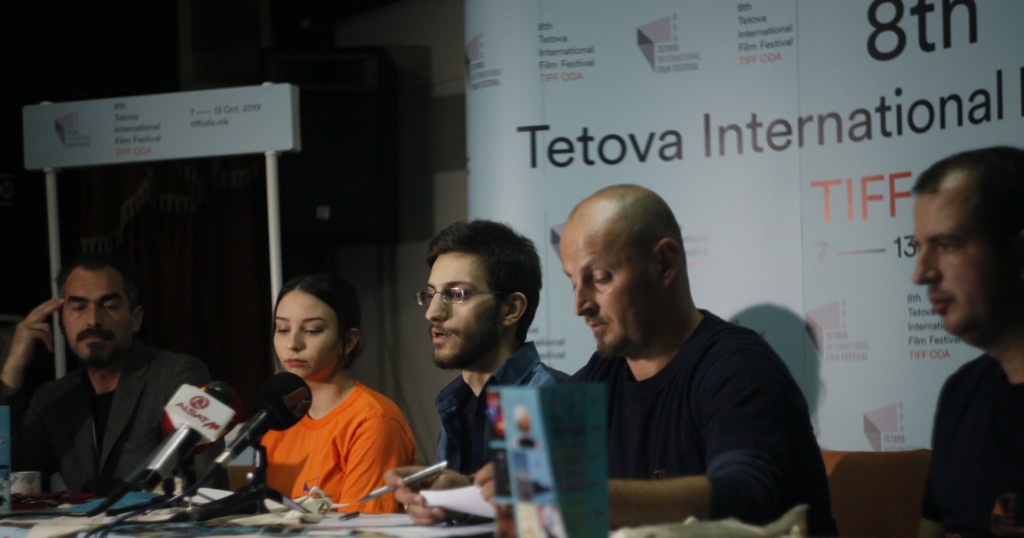
Can you tell us about your involvement with the Tetova International Film Festival? 

Berat Asani: During the time when I decided to get acquainted with film and I was looking for the academy of arts, with a group of friends we heard that a film festival was being held in Tetovo. There we got in touch with the founder of the festival, where we were informed in more details. I expressed interest to contribute to the organizational participation in voluntary form in the first edition. Then every year I had the great desire to contribute and challenge myself in all the functions of the organizational and executive form of the festival until the board made a decision that I should be in charge of the chairman of the festival in the 7th edition (of which I continue until now). I am committed to growing the festival each year, along with contributing to cultural growth and creating a tradition for our city. 

What do you have planned for this year for the festival? 

Berat Asani: Initially, the festival has its journey and this year we are very happy to realize the 10th (jubilee) edition. Therefore, it is a more special edition, I would not have wanted to say anything about the planning, but I wish that this edition finds better opportunities to bring back to more massive numbers of audience in cinemas and less to be involved in hybrid form or online. Soon we will open the application where filmmakers will have the opportunity to apply with their films.

What do you consider as your career accomplishments? 

Berat Asani: As a career achievement so far I would have considered the success of the festival, for which achievement are enjoyed by many other members. As a filmmaker, I think the latest film “Mother’s Love” was the best film in my opinion, but I think it takes a lot of work to declare success as an Author.

How do you see your role as a filmmaker? 

Berat Asani: My role as a filmmaker is to make as many feature films as possible. I feel the necessity to tell a story, a need which is present in all human beings, but the desire to tell it in visual form is my gift and chosen way where this makes the difference. We are often in situations where through the film we want to change a perception or give a message to the audience, where often there are generalized messages or experiences which are shared and re-experienced in that certain duration to achieve a conscious awareness, uplift and culture in a higher mass. 

Therefore, I am often not sure if I will ever be able to change the world through film, but that film will change me is more than certain.

Do filmmakers have any responsibility to culture? What message do you want to convey with your films? 

Berat Asani: Undoubtedly filmmakers have a lot of responsibility for culture, as film is a very powerful tool to present ideologies, events, moral and social norms to a wide audience, which through the emotions created by the authors, achieves an impact and real experience that the audience can carry in everyday life as a personal experience. The most important part for me is the way and the feeling a film can be experienced, along with its message or the moral of the story. 

What other hobbies do you have? 

Berat Asani: One of my hobbies and passions is skateboarding which I have been practicing for 11 years now and also since we are lucky enough to have Kodra e Diellit (Sunny Hill) as a Ski Centre in Tetovo, I have also practiced Snowboarding. During the summer I do swimming and Paddle boarding. As a lifestyle hobby I practice Bodybuilding. I like hiking a lot because I like nature as a source of ideas and peace of mind.

What’s next?

Berat Asani: As I mentioned above about the festival we are working on the realization of this edition, I am also engaged in two short films as screenwriter and director where we plan to start soon in the production phase, being in a pandemic situation and I wish Covid-19 pandemic to get past and to enable normal functioning for everyone!

Filed Under: Interviste Tagged With: Berat Asani, film director, Interview, Nora Kalaja

  • « Previous Page
  • 1
  • …
  • 82
  • 83
  • 84
  • 85
  • 86
  • …
  • 234
  • Next Page »

Artikujt e fundit

  • AMBASADA AMERIKANE – SIMBOL I MIQËSISË DHE SIGURISË PËR SHTETIN E KOSOVËS
  • QIRIAZËT DHE RRUGA E SHKRONJAVE SHQIPE DREJT LIBRAVE TË SHKOLLËS
  • Pushtimi osman nuk ishte shpëtimi ynë!
  • Domosdoshmëria e një strategjie shtetërore për parandalimin e ofensivave diplomatike të Serbisë dhe konsolidimin e pozitës ndërkombëtare të Kosovës
  • Kujtojmë në ditën e lindjes albanologun Eric Pratt Hamp
  • Burrat e Çamërisë që ngritën flamurin në Vlorë
  • Udhëtimi i një gruaje që frymëzon diasporën
  • KULLA E KURPALËVE DHE KURPALËT – NJË HISTORI QËNDRESE, ATDHETARIE DHE E LUFTËS PËR LIRI, PAVARËSI E BASHKIM KOMBËTAR
  • ISA BOLETINI NË DOKUMENTËT AUSTRO-HUNGAREZE TË VITIT TË VITIT 1912
  • NGA BIBLA TEK ABETARJA: RRUGA E ALFABETIT SHQIP DERI NË MANASTIR
  • Dokumentari “Pinocchio’s Harvard” me premiere madheshtore në Universitetin e Harvardit
  • Kinematografia e Kosovës shkëlqen në Nju Jork
  • NGA UNITETI I ALFABETIT TE UNITETI I VIZIONIT
  • “Dyqani i helmeve”, një parabolë groteske mbi zbrazëtinë ekzistenciale
  • Rinia në shesh, intelektualët në dilemë dhe përgjegjësia morale e një kombi

Kategoritë

Arkiv

Tags

albano kolonjari alfons Grishaj Anton Cefa arben llalla asllan Bushati Astrit Lulushi Aurenc Bebja Behlul Jashari Beqir Sina dalip greca Elida Buçpapaj Elmi Berisha Enver Bytyci Ermira Babamusta Eugjen Merlika Fahri Xharra Frank shkreli Fritz radovani Gezim Llojdia Ilir Levonja Interviste Keze Kozeta Zylo Kolec Traboini kosova Kosove Marjana Bulku Murat Gecaj nderroi jete ne Kosove Nene Tereza presidenti Nishani Rafaela Prifti Rafael Floqi Raimonda Moisiu Ramiz Lushaj reshat kripa Sadik Elshani SHBA Shefqet Kercelli shqiperia shqiptaret Sokol Paja Thaci Vatra Visar Zhiti

Log in

This website uses cookies to improve your experience. We'll assume you're ok with this, but you can opt-out if you wish. Cookie settingsACCEPT
Privacy & Cookies Policy

Privacy Overview

This website uses cookies to improve your experience while you navigate through the website. Out of these cookies, the cookies that are categorized as necessary are stored on your browser as they are essential for the working of basic functionalities of the website. We also use third-party cookies that help us analyze and understand how you use this website. These cookies will be stored in your browser only with your consent. You also have the option to opt-out of these cookies. But opting out of some of these cookies may have an effect on your browsing experience.
Necessary
Always Enabled
Necessary cookies are absolutely essential for the website to function properly. This category only includes cookies that ensures basic functionalities and security features of the website. These cookies do not store any personal information.
Non-necessary
Any cookies that may not be particularly necessary for the website to function and is used specifically to collect user personal data via analytics, ads, other embedded contents are termed as non-necessary cookies. It is mandatory to procure user consent prior to running these cookies on your website.
SAVE & ACCEPT